10.07.2024
PORT ECONOMICS

This book presents a study of various economic decisions together with their consequences of the providers and users of shipping port services. Port users include shippers, passengers, and carriers. Port, or terminal, operators will be the primary service providers; other service providers include, for example, ship agents, customs brokers, ship pilots, stevedores, freight forwarders.

Maritime economics itself consists of port and shipping economics. This book is an introduction to port economics. Although this is only a textbook, it is still expected to be useful in maritime research, to port users and service-provider decision makers, and to those of the general public who are interested in port issues. In 1984,1 and two other business professors established the center, Maritime, Trade and Transport (MTT), at Old Dominion University. Given that Norfolk, Virginia has one of the largest container ports on the east Coast of the United States, the main mission is to perform high-quality maritime researches in order to promote the Port of Virginia and international trade in the region.

Prior to 1984, although a transportation economist. I was not a student of maritime economics. However, MTT provided the author with the opportunity to become knowledgeable in the subject. In 1986, MTT was renamed the Virginia Center for World Trade and established as an economic development agency of the Commonwealth of Virginia...

460 Views 0 Comments Read more
10.07.2024
REACTION ENGINEERING FOR POLLUTION PREVENTION

This valuable and informative plus interesting title presented today was prepared with the sole purpose to define the fundamental engineering principles relating to environmental reaction, for example design of the reactor, being applicable to the developing of the relevant processes that provide any environmental benefit.

Touching the matters of prevention of the pollution impacting the surrounding environment, the main accent was placed by Martin Abraham and Robert Hesketh - on newly presented technologies minimizing the production of various undesirable side products causing pollution; however, they have also considered the matters of application of the reaction engineering to the treatment of wastes commonly produced by other means.

The opening section of this title mainly concentrates on the environment-friendly combustion, with the three articles addressing the existing methods of reduction of the NOx and PAH formation and it also covers several combustion products sensitive to the environment.

The following section of the book includes a good collection of contributions involving the utilization of catalysts to support the reactions. Then, there section comes dedicated to the use of the fluid solvents. Remaining parts of the book contain numerous interesting documents, dealing with some novel reactor designs. ​

461 View 0 Comments Read more
25.06.2024
CONTEMPORARY PIRACY AND MARITIME TERRORISM — THE THREAT TO INTERNATIONAL SECURITY

Since the world's oceans are largely unregulated spaces, they are particularly vulnerable to the attacks by maritime pirates. we all know that the maritime piracy and terrorism present a very serious threat to the international maritime shipping industry and they are normally combined, going together in most cases.

The maritime piracy itself is considered a marginal issue; however we shall say that the piracy taken together with the wide criminal networks and also with the corruption makes it even more threatening.

The content of the present study report is fully devoted to the contemporary piracy and is intended to provide all participants of the shipping industry with the information that could help them in getting better understanding of the current situation.

The two opening chapters of the publication provide brief introduction to the piracy and terrorism; they are followed by the chapter dealing with the threat assessment, where the author tells readers about the current maritime disorder and what initiatives are there to tackle it. The cooperation between terrorists and criminal world is addressed within a separate part of the book. Particular attention has been paid to the maritime insurgency and many other aspects considered important by the author.

1394 Viewing 0 Comments Read more
18.06.2024
BEHAVIOR AND HANDLING OF SHIPS

If you want to get a clear understanding of all possibilities of the big oil tankers as well as of all limitations imposed on them, you should definitely have a chance to try them out with no risk. And the Shiphandling Training Center located at Port Reve, in France will provide you with such a brilliant opportunity.

This is a place where a whole fleet of model tankers scaled 1:25 is being operated on a lake. It should be noted, however, that not only do vessel models offer this chance of handling scale replicas of the huge tankers under various conditions; the center also offers quite instructive overall view on the different maneuvers in a protracted time.

As a result, there is a lot of shiphandling operations conducted in this miniature world in a relatively short time, is five times faster than they would be in real life conditions. While the author of this book was observing the maneuvers on the lake analyzing them, it became quite clear to him that the positions of the pivot point plays a critically important role in explaining the vessel's behavior.

5838 Views 1 Comment Read more
16.05.2024
Why Do Not Ships Have Headlights?

Every now and then we hear yet another story about a nighttime collision at sea, maybe between a ferry and a yacht or even between two large ships. Either way, the same question always comes up – why did not they see each other?

Sure, if it is nighttime, it is harder to see things, as you must have noticed it yourself when driving at night, you need headlights to stand a chance of seeing anything. Yet, when you look at a ship at night, they do not have headlights.

But why? If the headlights work fine for car, why not for ships? Well, think about what a headlight actually is. It is just a source of light, designed to emit photons which can bounce off objects and return to your eyes. Your brain then interprets them and tells you what you are seeing.

Simple enough but you need a light powerful enough to illuminate the area you are looking at. The power from the light is dispersed across the full width of its beam. Then, when the light hits an object, small bit of its beam that hits the object is reflected back, but it is again dispersed, meaning that only a tiny fraction of the original light gets back to you.

That is fine in a car, you want to narrow the area right ahead of you extending out far enough that you can take action to avoid the things that you see. Even at motorway speeds around 100 meters should be enough. You are probably starting to see where I am going with this.

With a ship 100 meters may not be enough to see your own bow, let alone to see far enough ahead to take any action. A large cargo ship, for example, needs more than a mile to stop. With two such vessels approaching each other, you are looking at needing at least two miles visibility to take action in time. You know how bright a car’s headlight is. Just think how much brighter a ship’s headlight would need to be to have the same effect!

Imagine two ships approaching each other at night. We have already established that they do not use headlights to see each other. So, what do they use? Well, they still use lights, but they are called navigation or nav lights instead. Every seaworthy vessel is fitted with nav lights the idea is that they are arranged in a standardized distinctive way so that other vessels can not only see you, but also identify how you are moving. As nav lights are fitted to the target vessel, their power only needs to be sufficient to be seen by other vessels.

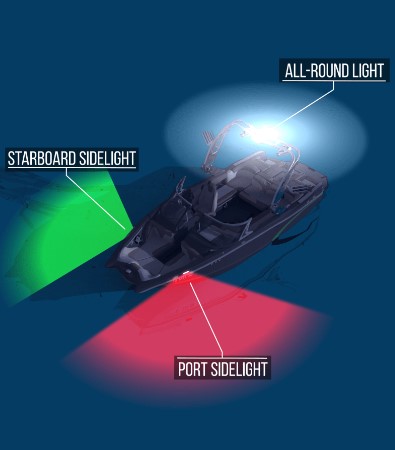
If you have a light fitted as shown on the picture, rather than just relying on a tiny portion of reflected light, you can see howWhy Do Not Ships Have Headlights 2 much easier it will be to see compared to using a headlight.

But what about identifying their movement? Let us take this cargo ship as an example. She would show two masthead lights, the aft one being higher than the forward one. These immediately tell other ships in which direction she is moving. But she also shows sidelights. These are the colored lights that you probably know about – red for port and green for starboard. Again, it reinforces, which way she is traveling.

But the lights can tell us even more than that. If we are looking at the vessel’s port side and she turns towards us – as the masthead lights come in line, you can start to see both sidelights. You know the other vessel is heading straight for you. Take the look from above and you can see that the only angle where you would see all those lights is from right ahead. The observant among you will spot that these lights do not go all the way around either. Instead, we have a single white light filling in the sector of the stern, as shown on the picture. What this means is that if you spot a single white light, one of the things it could be is a power-driven vessel viewed from a stern.

If she turns a bit you can come on the cusp of viewing her sidelights and mast headlights, too. Looking from above, the only thing where this is possible, is along the white line shown – it is two points of 22.5 degrees above the beam – the very definition of overtaking we took straight from COLREGs.

Of course, we just looked at a power-driven vessel here but there are countless variations on this arrangement. You can Why Do Not Ships Have Headlights 3add extra mast headlights to indicate you are towing or show only side lights to indicate you are sailing. You can even modify your status by adding two all-round red lights to show you are not under command, or three all-round red lights to show you are aground or make the middle one white to show that you are restricted in your ability to maneuver.
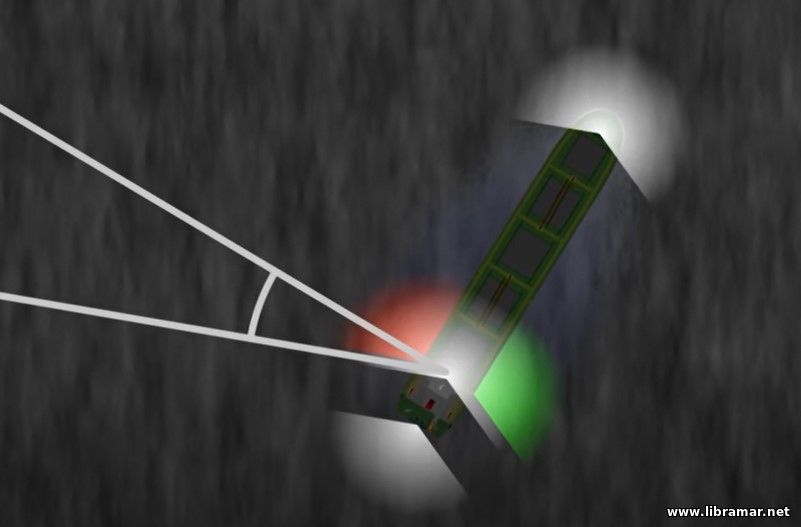
See, nav lights tell you so much more that headlights ever could. They accomplish the basics making the vessel show up against the dark sky. But, in addition, they allow you to identify the vessel type, work out its aspect, and see which way she is moving – all vital information when it comes to applying the collision regulations, and working out which of you needs to give way to the other.

902 Viewing 0 Comments Read more
27.04.2024
INTRODUCTORY CIRCUIT ANALYSIS

The main objective of the present revision of the publication was to address all the valuable comments provided by the readers as well as professional reviewers and also to deal with the ongoing industry trends. The newly added and thoroughly reworked information will help to expand the specific knowledge area. The content of the book was rearranged by the author to embed the new chapters and remove the material that was used less.

One of the features of this edition is that the author added the objectives to the beginning of each of the chapters. There are more than twenty chapters in the book, each chapter covering one important topic. The volume opens with the information about the current and voltage, resistance and Ohm’s Laws, series and parallel direct current circuits, different analysis methods, inductors and capacitors and magnetic circuits.

After that, we will proceed to the essential elements and phasors, alternating waveforms, and then power, resonance, network theorems and analysis methods as applied to the alternating current. The polyphase systems and transformers are covered in the separate chapters. An excellent reference and training source for the students and practicing electrician and engineers.

577 Views 0 Comments Read more
23.04.2024
THE BEST SEAMANSHIP — A GUIDE TO ENGINE SKILLS

The content of the first original title by Professor Toshio Hishima, namely "The Best Seamanship - A Guide to Deck Skills", was developed with his intention to help the deck crew members as well as the cadets to get to the better understanding of the different repair activities that they will get involved into onboard their vessels. Subsequently, the present publication was released, covering the shipboard machinery space activities.

The readers will start with the lathe work which is still quite basic and necessary-to-know information, followed by the gas and arc welding procedures and equipment. After that, they can proceed to the valves installed onboard their vessel, and here the coverage includes the technical maintenance of the valves, their types, replacement matters etc.

Working with slings is addressed within a separate chapter. The rest of the book ideals with the alignment issues, steel piping and its replacement, general works commonly carried out in the ship's engine room, and so many other important topics. The text is full of useful advices, that is the reason why the volume is so highly recommended.

1768 Views 0 Comments Read more
23.04.2024
THE BUSINESS AND MANAGEMENT OF OCEAN CRUISES

Nowadays, operating cruise vessels requires thorough knowledge of the cruise line work principles, which is a mixture of the different economic, technological, social, and environmental systems, forming the final product. The due attention shall be paid at all times to the uncertainties and conflicts that commonly arise when minimum of two of the above-mentioned systems are interacting.

This all creates serious issues for those dealing with the cruise shipping business. The idea of the authors of this book was to capture and duly document the most critical managerial challenges that the ocean cruise ship managers and operators have to face. Considering the number of people involved, this task is really of huge importance and needs to be addressed in detail.

The book is arranged in six parts, first one giving some general background of the cruise industry. The corporate, marketing and product management of the cruise lines are the topics of the following two parts, while the others will shed some light on the operation management, and future of the cruise industry.

963 Viewing 0 Comments Read more
« 1 2 ... 20 21 22 23 24 ... 497 498 »