 The present introductory volume was prepared by the specialists of the OffshoreEnergy to serve as a nice and informatory textbook to the offshore oil & gas industry. The material is arranged in a number of easily readable and understandable sections covering the most important aspects.
The main idea of the authors was to work out the book that would be interesting to the people even outside the industry, owing to which approach the volume will be a perfect one to the newcomers to the industry and even those thinking of linking their life to the oil and gas exploration and production.
In most cases, these people would need a good overview of the industry. The book opens with the top important topic, i.e. health and safety, including the procedures involves, hazards and work management systems, mandatory safety training and other matters.
Then, the reader continues to explore the essential info about oil and gas, geology, exploration, drilling operations and subsea technologies, structures, upstream/downstream logistics and many others.
 This book will be greatly appreciated by all newcomers to the industry. It will help them to get a deep and thorough understanding of the fundamentals including terms. The volume is a very useful collection of basic information and shall be used as a go-to resource saving time and collating essential information and data about concepts of pipeline integrity.
The publication is a perfect reference guide to a wide range of topics falling under the umbrella of pipeline integrity mentioned in the title. The content of the book is a good and informative compilation of commonly used terminology, technical concepts, techniques and methods that all of the people involved in the industry will most likely encounter during their work or researches in the field.
All explanations and definitions provided in the pages of this book are written in a language that would be easily accessible even to the non-specialists, all complex concepts are simplified to allow easier understanding. As a results, the readers are able to get a quick overview of any topic and understand it.
The authors draw the relationships existing between the technical concepts in a very clear manner supplementing it with numerous cross-references. Hundreds of data diagrams, tables, charts and drawings supplement the text. Featuring more than a thousand of entries, the dictionary will be of great practical use for all people involved in the pipeline related works.
 The present offshore handbook was specifically prepared to empower the practicing engineers working in the offshore oil and gas industry to better understand the rapidly growing markets of today's energy sector. They will have a chance to get familiar with the industry including complicated deep-water operations, properly understand the full range of this business, with particular attention being paid to the potential environmental aspects as well as future challenges; they will also be able to get new technical knowledge and exposure on the standards and real life case studies.
Brief contents below - Introduction; Offshore oil and gas; Formation, accumulation and composition; Definition of oil and gas - conventional crude oil, natural gas, gas condensate, gas hydrates, opportunity crudes, high acid crudes, foamy oil, heavy oil, extra heavy oil, tar sand bitumen, resources and reserves. The go-to glossary of the special terminology used in the industry has also been included for quick and easy reference. Recommended to all people engaged in any offshore exploration and/or production activities because of the amount of the information provided and the way it is presented.
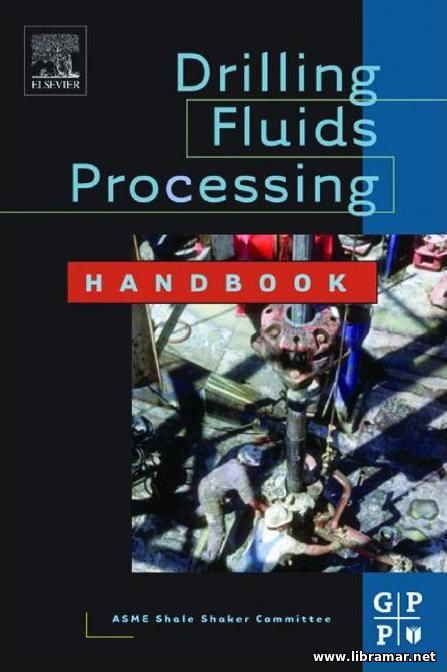 A great resource publication covering literally all technical aspects of the drilling industry from actual drilling the well up to the completion, including the historical methods etc. Have been appreciated by the readers all around the world as the excellent book on the subject matter. In fact, this is maybe the best available resource to be used by both drilling and petroleum engineers on the processing of drilling fluids.
The content of the book has been compiled on the basis of the valuable inputs from more than twenty foremost drilling experts employed by the world leading oil companies such as British Petroleum, Conoco, Shell and Amoco. The first volume to pull together a huge amount of the useful material and deep coverage of the topics related to the drilling fluids. The content is also covering the rapidly changing technology updating the drilling engineers on virtually all major technical aspects of drilling including the recently introduced equipment, fluids together with the newly implemented techniques.
The book was prepared by the specialists of the ASME Shale Shaker Committee - it starts with the introduction and brief historical overview, general information on drilling fluids and calculation of solids, tank arrangement and cut points, hydrocyclones and centrifuges and all other relevant information.
 The best available reference book covering literally all of the risers and pipeline design. The content of this latest release of the title is duly updated with the recent technical advances in this field, reflecting the huge professional experience of the author and addressing the truly critical issues of environment protection touching the relevant economical issues.
The pipelines commonly utilized for the transfer of hydrocarbons are deservedly considered the safest and also the most reliable way of exploitation of the valuable resources that are below the surfaces of the oceans. The design of the risers and pipelines is commonly looked at as quite a new technique that continues to develop; and the main final purpose of the subject developments is reduction of the associated costs plus the minimization of the environmental impact.
The author made a very good attempt trying to assimilate the basics of the various aspects of the applied mechanics of the offshore pipeline systems. His efforts have finally resulted in this remarkably useful publication representing the proven contemporary practices and all required technical knowledge to be of practical assistance to the persons planning to form a part of the industry.
 A must-have volume for all oil and gas industry workers. The book features excellent arrangement of the material and provides convenient and easily accessible reference for the offshore people not using these calculations and formulas regularly. The intention is to help them reduce the amount of the materials they shall carry to the site or rig floor.
The volume opens with a review of the basic calculations and equations; it provides numerous examples for better understanding. this is a perfectly handy reference book offering readers a quick overview of such important topics as the pressure control and drilling fluids, engineering and air/gas calculations - note that they are provided in either metric or English system.
The easy layout of the content will add to the practicality of the volume and allow to the workers and their managers to save time. This release of the book is covering virtually all calculations that are normally done offshore in conjunction with the drilling an oil well, production and also workover. An excellent and widely popular resource for everyone working on the offshore and onshore installations and directly engaged in the above listed activities.
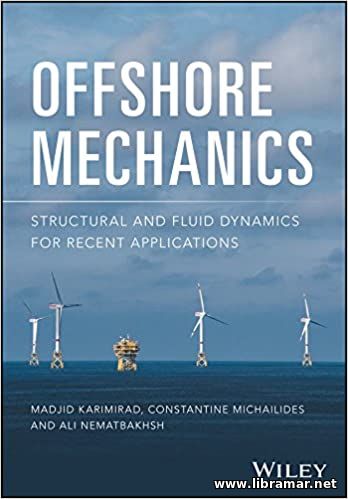 The intention of the author of this volume was to provide a good and extensive coverage of the essential offshore mechanics concepts with due attention paid to the newly introduced applications of the theory including, but not limited, to the different offshore installations, wind farms, bridges, and many others.
All critical areas of the design and analysis of the commonly used systems and structures have been addressed, providing the really fundamental information for the engineers engaged in the offshore industry. Note that both traditional and new methods have been covered, and different numerical techniques have been dealt with, such as the FEM and CFD. There are many examples and exercises included to track your progress.
The volume can be recommended to the offshore engineering students at higher levels, as well as the professional offshore engineers. All possible offshore environmental conditions have been examined, together with the foundation and mooring analysis, aerodynamic and hydrodynamic analysis, etc. in shore, the number of topics covered by the author makes this title definitely the best choice for the offshore engineering fellows who will benefit from its content.
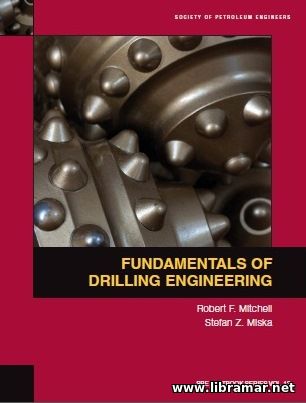 Here is the classic reference title intended to be of great practical use for the drilling engineers. The content of the book has been prepared by Stefan Miska and Robert Mitchell, two world recognized experts, applying a very technical approach when compiling the content. As a result of their combined efforts, the book is not difficult to read and the materials contained will be easy to understand even to the beginners; the illustrations and very informative.
We should still note that this is not the best choice for the absolute beginners and the readers are expected to have at least some minimal knowledge in the field. The title of the book says it all. The publication is full of very useful technical information and equations to be used by the practicing drilling engineers.
We would definitely recommend the present title to all people working in the drilling industry and looking for a good and comprehensive technical reference book. The content of the volume has been organized in a pretty sensible fashion and is easy to search. The crystal-clear pictures and informative data diagrams are supplementing the main text part of the book. It is a technical volume ideal for the specialists with moderate engineering experience.
|