 The principal part of this classic and world popular title has been arranged in five major parts with the first one providing general information and remaining four addressing the sailing and steering rules, navigating lights and shapes, sounds plus light signals, and exemptions from the applicable requirements. Four annexes to the rules are detailing the lights, shapes, and sound signaling appliances, cover the distress signals as well as the additional signals for the fishing vessels.
In addition, the volume contains the excerpts from the relevant IMO conventions and recommendations, risk assessment tables, manoeuvring information and descriptions. The list of vessels referred to in the volume has also been provided... For several centuries there have been established official rules in existence developed with the intention to prevent the ship collisions at sea; however, there were no any rules that would have statutory force, until last century.
In the middle of XIX century, a set of rules was drawn by the London Trinity House, and one of those rules obliged a steam ship passing another ship in the narrow channel to leave the other ship on her port hand, while another regulation of this set obliged the steam ships on different courses with potential risk of their collision, to alter the course to starboard in order to pass on the port sides. Some other regulations were there for the ships under sail...
 This great collection of lectures on the subject of marine navigation was compiled with the ultimate intention of the authors to explain, in the simplest possible manner, the essential provisions of the navigation as outlined in the pages of the Bowditch’s American Practical Navigator, available at our website.
For the easier reference, the content of this volume was arranged in eight parts, and it is recommended to go for one part per week. The first week the trainees shall be acquainted to the piloting, including the associated equipment, publications and techniques involved. The second week is the one they will work on dead reckoning, including but not limited to the Mercator sailing, latitude and longitude and all other commonly related topics.
The third part of the volume and the associated week of training will be given to the subject of celestial navigation, still considered a fundamental one for the mariners… In short, going week by week, the trainees will eventually cover all areas of the navigation that the author considered important enough to include in the collection, and they will be equipped with enough knowledge and understanding of the maritime navigation to proceed further to their studies.
 In fact, the present title is a very first of the sailing books to follow the ideal learning curve that would be greatly appreciated by any sailor in any country of the world, and of any age and, skill and education. The author does not tell readers about the different aspects of sailing, such as anchoring of sail trim, in one chapter. Instead, the readers will get to know what they should have the understanding of, exactly when they want to do that.
The materials of the volume is presented in ta remarkable accessible manner, making it a perfect choice even for the newcomers to the world of sailing. The author starts from the very essentials, slowly proceeding to the relatively complex techniques. The text part is full of the perfectly worked and clear explanation, supplemented with more than a thousand color images, included to make the understanding even easier.
Note that there are also sidebar features in this volume that will provide you with the alternative options, terminology used throughout the text, and differences between types of boats. In short and according to the huge number of the reader reviews, this is a truly best title for self-learning and we do encourage all lovers of sailing to start reading it without wasting any single minute of your time.
 The main objective of Tadeusz Pastusiak, the author of this nice title, was to provide the participants of the international maritime shipping industry with the thorough analysis and discussion on the viability of using the NSR, or the Northern Sea Route, as an advantageous, safe and stable passageway for the transportation of cargoes from the Far East to Europe and back, either today or at any time in the nearest future.
The author analyzed the existing conditions in order to define and properly evaluate the factors determining the viability of same. The intention was to find out the projection for the subject sea route, considering such important factors as the changes in climate in the area, which shall be paid ultimate attention at all times. The huge amount of various information was carefully examined including, but not limited, to the hydrological and meteorological data.
The book also includes some historical background acquainting readers with the history of navigation on the NSR. In addition, all environmental conditions have been analyzed in detail. Serious attention has also been paid to the technical aspects of the navigation. The volume will be of great practical interest to the students and professionals of navigation as well as other disciplines.
 Well, the title by Nigel Calder, who is also the author of the Instant Handbook of Boat Handling, Navigation, and Seamanship, is quite self-explanatory. This small yet very useful publication was released with the final intention to be used by people as a quick reference source - it is, in fact, the on-board guide to the basic symbols and notations that are used on the various nautical charts.
We all know that the nautical charts contain a huge amount of useful information but it is very important to know how to decipher them, otherwise the charts are next to useless pieces of paper. In order for the chart to get bewildering, a key is to be found to its symbology. This nice and helpful booklet was prepared by Nigel Calder, who is one of the most respected boating authors of today, and he did his best to help readers make sense the very complex system of graphic elements and signs used on the nautical charts.
We would definitely recommend this publication for practical use because it is so compact yet very rich with useful information. At the same time, it will be very good for people who are not intending to go to the sea and use it right now, but rather need some simple and small book to get familiarized with the nautical signs and graphs in order to be able to use the nautical charts when they are finally on board the vessel.
 A constantly increasing number of the merchant vessels find themselves chartered to operation in Arctic waters, creating a real and significant demand for the newly constructed ice-classed vessels. Subject requirement is commonly applicable to the vessels that operate in the low temperatures or in the iced waters, with their crew duly trained to man such sort of vessels, and it has already brought about by numerous factors including likelihood of the shipping trade routes that are opening up in the Arctic region, coming on-stream of the terminals in northern regions, and a significant increase in cruise traffic in Arctic region.
All above mentioned factors are directly contributing to the requirements for the ship crews to have access to all required and available technical knowledge from the ice pilots and navigators. Operating a vessel in iced sea required higher standards of training combined with the practical experience. This combination will allow the required development of the skills and professional knowledge and proper understanding in order to competently and efficiently manage the safe passage of the vessel.
Safe navigation of the vessel in ice comes as a result of the experience in the winter navigation combined with the ability of the crew to perform the proper interpretation of the available reports and select the best route on the basis of the behavior and characteristics of the ice...
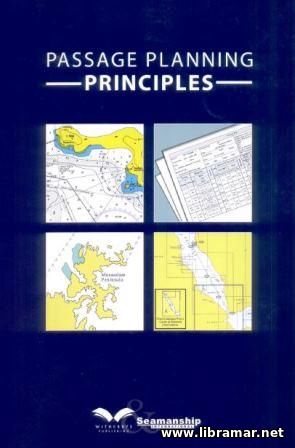 The present publication is covering all stages that shall be undertaken when preparing a good passage plan for your ship. The authors have explained all steps involves, from appraisal to the monitoring, in a logical and detailed manner. The volume shall be readily available on the bookshelf of all bridge team members regardless of their skills and professional experience, and it shall be referred to at all times.
The authors made every effort to present the relevant techniques very clearly, making the content easily understandable even to the people with not too much of the practical experience, so it is something to start with. Right now, the national and international requirements have been developed and are available for application to the passage planning. However, this volume provides a ready check sheet to be used by the bridge team to ensure that the high competency standards are met.
The document shall be used together with the Passage Planning Practice by the same authors. The fully worked example has also been provided for illustration. The passage planning using the electronic charts is covered in a separate chapter. There is also a glossary explaining the terminology used throughout the text of the publication.
 The passage plan shall be prepared for all vessels and it shall cover the complete voyage starting from the berth of departure and up to the berth of the arrival. Subject plan shall be prepared in strict compliance with the recognized international/national standards and to the standing orders of the shipping company. The content of the plans shall also be following the navigational practices and standards established within the SMS, i.e. safety management system of the company.
The vessels of particular company will most probably use the same format when preparing their passage plans, though the variations commonly cause by the types of cargo and of the vessel, as their as of the commercial agreements are also possible. The passage plan that has been used within this publication is not compliant with the instructions of any specific shipping company and has been presented to serve as an example of preparation. The passage plans usually differ with their layouts.
Generally, the documents specific to the particular shipping company are used when preparing the voyage plans. The authors of this work have used the general layout for the plan, balancing on the information on the charts with the other documents relating to the passage plan. Do not forget to use all documents related to the passage plans together with the navigational charts...
|