 For over four and a half decades, the Merchant Marine Officers' Handbook has served as an indispensable guide for new deck officers seeking guidance on their professional responsibilities. Despite its longevity and enduring popularity within the maritime industry, it had become increasingly evident that a comprehensive update was necessary to ensure its continued relevance. This has now been accomplished.
While the maritime industry may be steeped in tradition, and there may be nostalgia for the past, the demands of modern economics necessitate adaptation. Sophisticated and versatile equipment has revolutionized the industry, placing greater demands on the knowledge and skills of licensed officers than ever before. Although sail power has disappeared, the licensed officers remain central to any vessel. They must possess strong seamanship skills, technical expertise across multiple domains, advanced qualifications, and unwavering dedication. This edition represents a complete overhaul of the original text, retaining only the core mission: "… for use for reference purposes on board ship, as well as to meet current requirements for the deck officer’s license.”
The editor has enlisted experts in their respective fields to achieve this goal, recognising that the sheer scope of the subject matter surpasses the capabilities of any single individual. The primary challenge for the editor has been striking a balance between comprehensiveness and brevity, carefully selecting which topics to include and exclude.
 As a product of modern navigation theory and technology, integrated navigation increasingly utilizes inertial navigation systems (INS) due to their inherent advantages like autonomy, high short-term accuracy, and all-environment operation. Information processing is paramount in these INS-based systems.
This book focuses on mitigating the error sources inherent in INS data, including gyroscope noise and temperature drift, as well as addressing issues arising from discontinuous observation data, all of which compromise navigation accuracy and robustness.
The book details typical inertial devices and integrated navigation architectures, analyzing techniques for gyro noise suppression, temperature drift error modeling and compensation, navigation strategies for handling discontinuous data, and exploring brain-inspired navigation paradigms.
The book seeks to aid readers in resolving these issues. It incorporates simulation-based verification of the presented intelligent information processing methods, making it a valuable resource for students, researchers, and engineers in navigation-related disciplines.
 This book offers an introduction to the core principles of marine vehicle control for students who are new to the subject or looking to solidify their understanding. It's aimed at advanced undergraduates (4th or 5th year), master's students, and early-stage Ph.D. candidates, bridging the gap between these academic levels. Practitioners in the field may also find it valuable as a refresher on the foundational concepts that underpin the more advanced control techniques for marine vehicles currently being developed.
The idea for this book comes from the author's experience researching and teaching marine robotics at Florida Atlantic University (USA) and later in automatic control and mobile robotics at the Libera Università di Bolzano (Italy). The book is structured into two main parts: Part I: Focuses on the control of linear time-invariant systems. It provides a foundation for understanding how systems respond dynamically, how feedback control works, and how stability is achieved. Part II: Explores the stability and control of nonlinear systems.
Each chapter ends with a list of references and practice exercises focused on the control of marine vehicles. Chapters 1-6 are suitable for a one-semester course for senior undergraduates. A master's level course could cover Chapters 1 and 6, along with selected topics from Chapters 7-12. In-depth coverage of Part II, particularly nonlinear stability analysis, feedback linearization, and geometric control, would be suitable for a one-semester Ph.D.-level course.
 Presented to your kind attention here is the fifth, thoroughly revised and updated, edition of one of the most popular titles on ship navigation available today, retaining the clear and easily followable explanations making reading a pleasure even for the people with limited knowledge and experience in navigating marine ships.
The father and son were the team that created the subject work, of course with many valuable contributions provided by the expert masters and pilots. All basic maneuvers that are normally taking place during the regular shiphandling, as well as when docking and undocking the vessel, have been covered in detail.
The authors also addressed many of the critically important activities including, but not limited to the anchoring and passing them locks, lightering offshore, buoy moorings, bridge practices, and even simulator training. All materials presented in the pages of this volume are explained in a quite nontechnical way so one could start immediately. Make sure you have a copy of this book on your bookshelf.
 Despite all recent technological advancements in the field of provision of marine safety, including the newest e-navigation tools and modern satellite systems, as well as the perfectly developed training methods for contemporary navigators, maritime collisions continue to remain a prominent issue in major maritime casualty statistics. While collisions may not always be the leading cause within these statistics, when they do occur, they often lead to significant losses.
These incidents can result in severe consequences, including loss of life and personal injury, marine pollution, fire, explosions, cargo loss, and property damage. A maritime collision is defined as "the violent encounter of a moving body with another." Notably, collisions at sea do not necessarily involve direct contact between two vessels; they may also occur between a vessel and structures such as bridges, wharfs, or cranes. Such incidents are classified as 'allisions'. The foundation of maritime collision law can be traced back to ancient Roman law, which lacked specific navigational rules apart from customary maritime practices and jurisprudence regarding fault and liability for loss or damage. In 1840, the Trinity House navigational rules were established, followed by the first UK statute to incorporate navigational rules in 1846, which evolved alongside additional statutory regulations in 1851, 1854, and 1858.
The first diplomatic conference focused on navigational rules took place in Washington in 1889, convened by U.S. President Benjamin Harrison, resulting in the first comprehensive set of international navigational regulations that came into effect in 1897. Subsequent conferences in Brussels in 1910 and London in 1948 and 1960 made further revisions to the international collision regulations. A significant overhaul occurred in 1972, led by the International Maritime Organization (IMO), culminating in the Convention on the International Regulations for Preventing Collisions at Sea, known as COLREGs 1972. These regulations have been adopted by nearly all maritime nations and are "applicable to all vessels upon the high seas and in all waters connected therewith."…
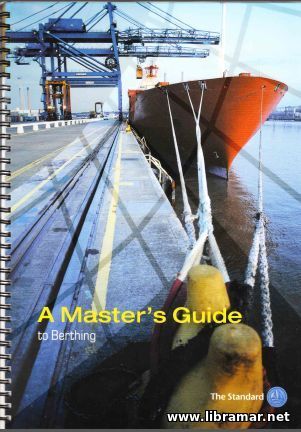 The present publication belongs to the popular Master's Guide series by The Standard Club. Any ship handler shall have a clear understanding of what is actually happening with the ship under his command - not only that but also, and maybe more important - what will happen with the ship in a short time.
The proper knowledge of the theoretical basics will make it easier to identify the maneuvering characteristics of the ship and quickly evaluate the skills required to control the ship. Such knowledge is considered critically important in a harbor environment when the vessel encounters narrow channels, cross-winds, currents and close quarters situations. In fact, berthing shall be treated as the culmination moment of any voyage - this is the very moment when the ship is mating with a stationary and solid berth.
That is why it requires gentle and precise control which is demonstrated by the ship handlers in harbors all over the world every day. Most of the vessels dock safely most of the time, however the final outcome of the maneuver chosen and conducted by the ship handler is not always fully successful - this may eventually result in a ship demolishing jetties, hitting berths running aground and even colliding with other ships - and this actually happens at a really alarming frequency...
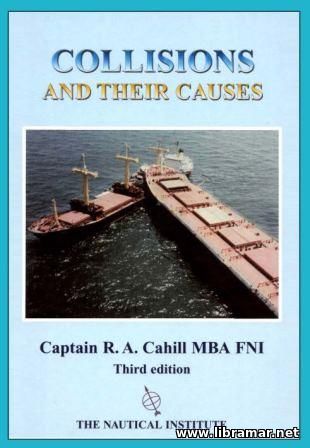 It goes without saying that no one would like to be reminded about their accidents, however we shall all understand and accept the importance of learning from mistakes. Nowadays, the maritime navigation is aided by the various technically sophisticated integrated systems of e-navigation installed on board most of the vast majority of modern ships to provide precise positioning of the vessel, as well as detecting and heading functions, all making the navigation much easier than it used to be decades and centuries ago.
But still all ship masters and owners shall possess due knowledge of the risks of collision and/or stranding that remain present and shall be accounted for at all times, since failure to do so can eventually result in the severe and even tragic consequences, although the stranding and collision cases are relatively rare today.
The idea of the author of this brilliant title was to remind readers that it is critically important to effectively manage the above mentioned risks, enabling the ship officers to apply the associated rules in a consistent manner, contributing to the safety of the ship, people on board, and environment. It is a great one for those having enough prescience and determination to go through this collection of selected incidents, and analyze the associated situations and root causes.
 The main idea and intention of the authors of this brilliant title was to set out all necessary knowledge as well as the established methods and most workable techniques to be applied by the mariners willing to avoid getting in the risky situations with their anchor handling tug ships, or AHTS for short, when performing their day to day activities.
The forces acting on the ship hull during the routine operations have been analyzed, and capabilities of the vessels discussed in detail together with the relevant shipboard equipment. There are worked real life case studies included by the author in order to better illustrate the hazards experienced in the course of the anchor handling and towing operations.
Mainly aimed at the masters of the AHTS vessels and their crew members, the volume will be equally useful for the rig movers, tow masters and other specialists, including even the shore support personnel. The information is presented in a professional way, very understandable and concise, and the contents will be easily understandable for the mariners at all levels of skill and experience. It is definitely a must read book for all those intending to participate in the anchor handling and/or towing activities.
|