 In the inaugural extensive survey of the world’s female pirates, "Pirate Women" recounts the tales of both historical and mythical women who, throughout history, sailed alongside—and at times led—their male peers. These women hailed from diverse backgrounds but shared a common aspiration: the pursuit of freedom. For a long time, history has overlooked these female adventurers, until now.
Their narratives span from ancient Norse warriors such as Awilda, Stikla, and Rusla; to Sayyida al-Hurra of the Barbary corsairs; from Grace O’Malley, who instilled fear in shipping operations around the British Isles; to Cheng I Sao, who commanded a fleet of 400 vessels off the coast of China in the early 19th century. Author Laura Sook Duncombe also delves into the perspectives of the storytellers and myth creators.
What biases and motivations influenced them? What aspects did they omit? "Pirate Women" investigates the reasons and methods behind the narration and transmission of these stories, as well as how history is shaped by those who document it. This work represents the most comprehensive collection of women pirates in a single volume, brimming with thrilling adventures. In this book, the stories of pirate women are brought from obscurity into the deserving limelight.
 The ocean has consistently served as a wellspring of grand narratives of endeavor and exploration. Our connection with the sea – encompassing work, play, love, loss, hope, and despair – plays a crucial role in shaping human identity, defining who we are as individuals and as societies.
You can uncover these grand tales of adventure at the National Maritime Museum, located in Greenwich, London – the largest and most frequented museum dedicated to seafaring in the world. Its extensive collection has inspired this book of puzzles, which will guide you on a journey around the globe.
This book features over 100 puzzles, many of which draw inspiration from the museum’s artifacts and their narratives, including maps, ships, nautical terms, explorers, myths, legends, iconography, and maritime traditions. The puzzles will challenge your general knowledge, observational skills, and interpretative abilities along the way.
You may navigate through the book in any sequence you prefer – there is no predetermined path on this journey! Some puzzles may present greater challenges, but you can always continue onward and revisit what you may have overlooked. By the time you reach the conclusion, you will have traversed centuries of history, crossed vast expanses of ocean, and made innumerable discoveries – so secure the hatches and embark on your voyage!
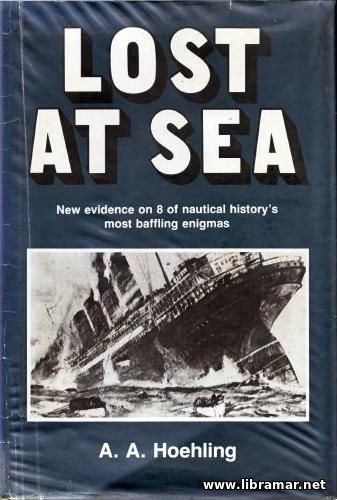 An excellent and extremely interesting one. This book is featuring the truly incredible and fascinating stories of eight ships together with their passengers. Some of those people did vanished without any sort of trace, and the author is exploring several maritime mishaps that have never been explained before. According to the reviews submitted by the readers, he has the ability to properly capture the very essence of the mystery cases; and, at the same time, the author of this volume manages to maintain a highly readable narrative text.
We would definitely say that this is a real must have book for all lovers of the sea stories and especially mysteries. They will for sure enjoy reading this book since it is so informative and also sheds the light on the numerous maritime cases of the past. Highly recommended to the people with the interest in the historical mysteries.
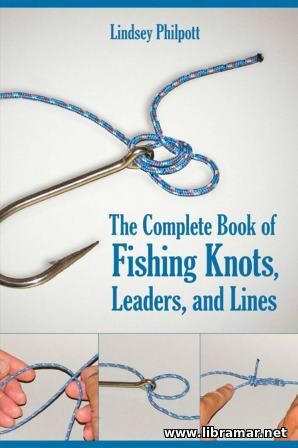 This is one of the best titles on the subject of knot making ever published. Read the book if you are intending to make first-class fishing knots. There are hundreds of colorful pictures accompanying the text explanations of each particular knot so one would just have to follow the clear step by step instructions.
The most of the author’s attention was paid to the traditional knots that have already proven effective. It is a truly perfect pick for the library of any fisherman, yachter, and boater. Written by the recognized expert in the field, the volume will give you clear and easy-to-follow directions for dozens of knots, starting from the simplest ones for the newcomers and then proceeding to the specialized types for the professionals.
Among the knots covered and explained, there are Bimini Twist and Palomar, Arbor and Paragum, and so many others. Note that there is a compact glossary of the terminology used when explaining the knot making process and covering every single part of it. Also, the useful tips have been provided on selecting lines. Just make sure you have obtained your copy of the book and go through it carefully before you start your journey for a big or small fish as necessary.
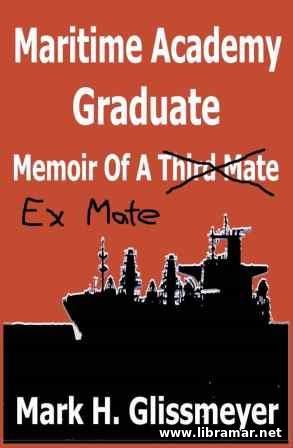 This is a very interesting and specific reading intended for the people with real interest in working and living on board ship. The author shared his huge practical experience and managed to narrate some of his not too unpleasant experiences of the times when he was working as a third mate.
The volume shall be read by literally all future mariners, all those making their first steps in the world of maritime shipping, or those thinking of choosing this path. Sometimes people do not have a luxury of having a clear picture of what they shall expect and do not have sufficient information, talking of both positive and negative sides of the thing.
Although the author wrote mainly about the work on the United Stated flagged merchant ships, we would say that his experiences and feelings are equally applicable to any other fleets. The style used by the author for documenting the events on board make this book perfectly suitable for all categories of seamen, from newcomers to the experienced mariners, as all of them will benefit from reading.
The publication was very well met among the seamen in different parts of the world, so we can recommend it to our readers, as well. Take your time, read, enjoy, and think. Note that the book is presented in both pdf and epub formats.
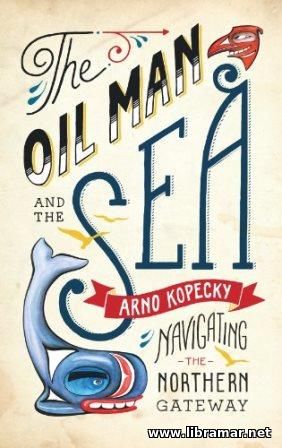 The title will for sure be greatly appreciated by all lovers of sea and sailing, as it tells the story of the brilliant travel of the author and his companions on board a sailboat with the intention to explore the new sea route. The voyage they were planning to take had a history of numerous incidents – more than a thousand, including the groundings and explosions, ship collisions and so many others, up to the sinking, and that statistics covers only the period from the year 1999 to 2009.
Note that the author himself did not have any seagoing experience at the time when their voyage started! The narrative is presented with the nice humor and will be read with pleasure. According to the numerous reviews, this one is a perfect sample of the good writing, and this is what gained this title worldwide popularity.
In addition to the voyage details, the author also described the people and communities they did meet, and all interesting facts and events. The readers will find this volume providing a good insight into a way of life of the people of the subject part of the world. This is something not discussed in due details in any of the titles available today so it definitely makes the book worth reading.
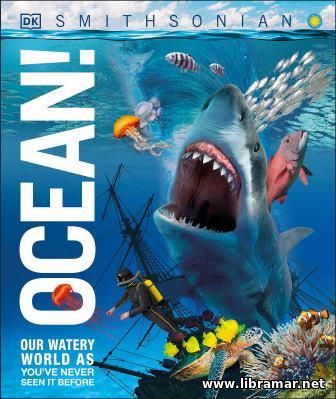 Here is one of the most popular titles on the subject of Ocean. It is one of the parts of the world famous series developed specifically for the younger people willing to know more. This is a truly ground-breaking encyclopedia containing all information one would need, presented in a perfectly fascinating way which gained it so much of popularity.
The text of the publication is full of interesting facts, supplemented with the informative timelines and charts, covering huge number of topics. Apart from that, there are many images, all of them detailed and colorful, included to make the reading process more enjoying, and the understanding much more easy.
The author even applied a 3D approach to presenting images. Thoroughly checked prior to release by the recognized experts, the Encyclopedia was appreciated by all readers. You will find information about the sea creatures and ocean science, maps and environments, animals and so many other areas.
Not only will this one be the best choice for your kinds, but you will also have nice time reading it and getting to know things you hardly knew before. In short, this is an easy and enjoyable reading for all those interested in the seas and oceans of the world.
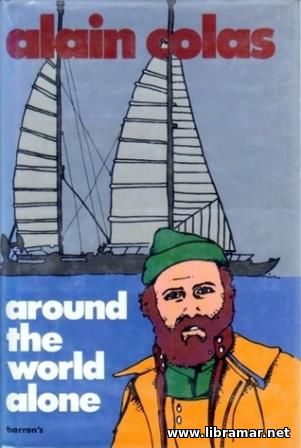 This is quite a rare publication – the very first release of the Alain Colas’ story of the voyage around the planed he undertook back in 1978 on board his seventy-foot craft by the name of Minerva, a trimaran one. The text of the volume is truly fascinating as the author is sharing his own experience and his thoughts in the pages of this brilliant volume.
There are numerous images that have been included by the author to supplement the narrative part of his book. Note that the author is the winner of the world famous and traditional Transatlantic Race which he had won back in 1972 before making preparations for this voyage. It is not only about the victory – he also set a world record! Straight after that, the decision was made to undertake a thirty-thousand mile passage with the only stop in the Sydney city of Australia.
The subject voyage took him almost one hundred and seventy days, each of them being interesting enough to be told about in a book. Should you have some free time, have a sit with this book, read it and enjoy. The publication is aimed at anyone in love for the sea and sailing, adventures and bravery – you will find enough of that in this book so do not delay and start tonight – you will like it.
|