
This relatively compact yet extremely comprehensive publication was developed and released by Chevron, one of the world leaders in the fuel oil field of today. The intention of its authors was to present industry some ready to use guidance that would be easily applied to the day-to-day operations.
Starting with the brief introduction to what the fuel oils are, and some historical background of the oil exploration and production, the authors give a good overview of the crude oils, including the way they are formed in nature, their classification and composition and, of course, refining of the crude oil for subsequent production of the fuel oils.
After that, the fuel oils themselves are covered in detail - here the authors concentrated on the applications and technical specifications of the fuels, treatment that the fuel oil shall undergo onboard ships, compatibility of the fuels and their stability, fuel commingling and other aspects. Moreover, such interesting areas as biofuel and fuel contamination have also been addressed, together with the chemical treatment of the fuel oils.
The maritime ecosystem is intricate and comprises numerous entities that engage with one another. These entities include ports, ships, port authorities, maritime and insurance companies, customs, the shipping industry, banks, ministries, various commercial providers, and additional infrastructures such as railroads and airports. All these interactions are facilitated by sophisticated and diverse information and communication technology systems.
Commercial ports are classified as critical infrastructures for transportation due to their large-scale nature, where any degradation, interruption, or impairment of their physical or cyber systems can have severe repercussions on national security, health, safety, economy, and the welfare of both citizens and nations. They are characterized by a multitude of interdependencies with other entities within the maritime ecosystem. The effective operation of commercial ports is heavily reliant on the proper functioning of both their physical and cyber systems.
The substantial volume of critical and sensitive data, the information and services managed on a daily basis, the numerous entities that require service, and the interdependencies with other infrastructures necessitate robust security management. This book examines the current state of security concerning the critical information infrastructures of commercial ports and their supply chains, while also identifying gaps in the security management of these ports' CIIs, and proposing research directions and recommendations.

Since the release of the fifth British edition, along with the Russian and Taiwanese editions, there has been significant advancement in navigational equipment, prompting numerous additions, omissions, and enhancements in this sixth edition. The Consol and Omega systems are now rarely utilized on merchant marine vessels, leading to a substantial reduction in their descriptions; however, since they operate on the same principle as the Decca system, they have been included in Chapter 4.
The brief chapter on integrated navigation systems has been removed, but a new chapter on the Global Positioning System has been introduced, which is expected to become operational in 1992. Utilizing highly advanced electronic techniques, this satellite system will offer accuracy that surpasses all current positioning systems. In the first chapter and the chapter on radar, there are various additional clarifications regarding the side lobes of a radar main beam, examples of Parallel Index Navigation, and the principles and application of Automatic Radar Plotting Aids (ARPA).
The Transit system is widely used, and although it is anticipated to become obsolete approximately two years after the GPS is launched, it is still included in the text. Various topics are now discussed in greater detail in an Appendix. While knowledge of these topics is not crucial for comprehending the main content of the book, it is provided for those interested.
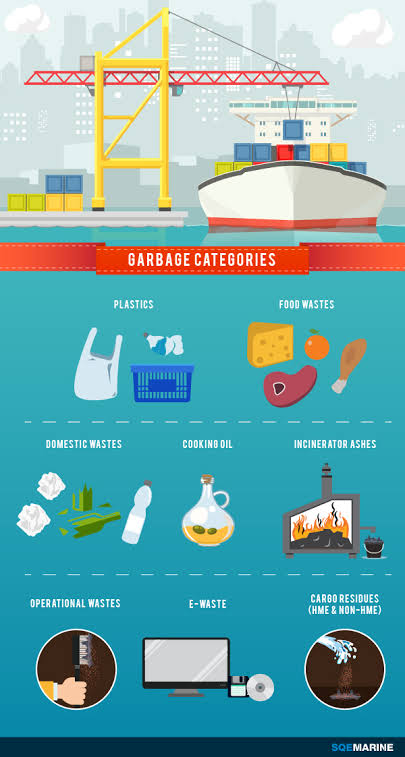
The Ocean is vast, it covers over two thirds of the Earth’s surface and it is home for ninety percent of life on this planet. And, it is critical resource for human life. Regretfully, the Ocean is now polluted by over one hundred million tons of plastic debris.
MARPOL, or the International Convention for the Prevention of Pollution from Ships, contains two Annexes targeted at eliminating waste pollution from ships. These two regulations are important step to protecting the Ocean.
Let us how a look at how MARPOL Annex IV governs the collection and disposal of the sewage at sea, and also check the requirements for storing, sorting and disposal of the garbage, including those related to the shipboard Garbage Management Plan and correct filling of the Garbage Record Book.
MARPOL Annex IV places restrictions on the discharge of sewage from vessels engaged in international voyages. It entered into force back in 2003 and applies to vessels in excess of 400 gross tons., as well as passenger vessels. Sewage includes drainage and waste from toilets, the ship’s hospital, places containing live animals, and any waste water that is mixed with sewage.
This book can offer its readers a clear and quite comprehensive presentation of the materials demonstrating the process of progression from the basic physical concepts to the real-life engineering applications and helping them easily see the whole practical significance of the fluid mechanics basics.
The broad variety of the topics included in the volume provides instructors with numerous options for teaching the courses and presents a very useful source of information for the students even after their graduation. The unique problem-solving approach applied by the author of the book has been presented at the very start of the publication and has been carefully integrated in all of the examples.
The way in which the material has been presented, makes it much easier to understand that in most of the other textbooks. The book has been widely recognized as one of the best references or first-time books for the students and professionals in the field of fluid mechanics. The author has also included some advanced text related to the viscous flow, and his efforts have eventually resulted in this resourceful and remarkably informative title. Excellent real-life example problems are supplementing the theoretical explanations making them much easier to follow and understand.
The second edition of Maritime Security: An Introduction represents the pinnacle of security literature (the first edition is also accessible). It encompasses a wide range of topics while delving deeply into specifics. The portrayal of the maritime setting and seafaring traditions is so thorough that readers can nearly sense the salty breeze and hear the calls of seagulls. Author Michael McNicholas, a seasoned expert in maritime security, demonstrates his expertise throughout the text.
This volume offers practical, experience-driven, and validated insights, along with a comprehensive "how-to-guide" on maritime security. McNicholas articulates in straightforward terms how commercial seaports and vessels operate; identifies existing threats; outlines the security policies, procedures, systems, and measures necessary to counter these threats; and details how to perform security assessments and develop plans for ships and ports.
Whether addressing issues such as weapons of mass destruction or cargo theft, Maritime Security delivers essential guidance for professionals tasked with safeguarding our shipping and port facilities. New chapters concentrate on comprehensive government maritime security, United Nations legal conventions and frameworks, transnational crime, and migration. Updates throughout the text will present the most current information in this increasingly vital field.
It serves as an excellent introduction to the challenges confronting this crucial transportation channel, featuring three entirely new chapters and revisions to reflect the evolving landscape of maritime security, with enhanced focus on migration issues and transnational crime; furthermore, new contributors highlight legal security and cybersecurity matters.
Port Operations, Planning and Logistics provides an in-depth analysis of global port systems by utilizing both theoretical and practical (managerial) methodologies in port operations, management, and policy.
The author leverages a unique blend of extensive cross-management professional experience and well-established multidisciplinary academic knowledge to deliver a comprehensive publication that spans various research domains; including economics, engineering, operations, technology, management, strategy, and policy.
The book delves into a range of port-related subjects such as ICT and technology applications, investment and financing, pricing and asset management, contract regulations, safety, security, and environmental management. Each topic is bolstered by case studies and practical examples reflecting the latest advancements in the field.
This publication is exceptionally thorough in its examination of Port Logistics. Additionally, it features chapters on Port Security, ISPS, and ISO 28000, which will be crucial for all companies engaging in trade with the US in the future.
The expansion of global trade, travel, and the transportation of goods across borders, seas, and oceans has yielded significant advantages for humanity. However, it has also enabled the worldwide proliferation of invasive aquatic species (IAS), which have increasingly detrimental effects. These species frequently lack natural predators in the regions they invade. The issue intensified with the advent of steel hulls in the 1830s, which permitted ships to utilize water as ballast instead of solid materials.
The primary objective of this report is to outline the evaluation process of Ballast Water Management Systems (BWMS) as it has developed over the past decade. This methodology is grounded in internationally recognized risk assessment methods that are implemented in various countries and regions around the globe. The methods and assumptions are derived from the World Health Organization (WHO), the Organization for Economic Co-operation and Development (OECD), the European Union, particularly the European Chemicals Agency (ECHA) concerning the assessment of chemicals and biocides, and the US Environmental Protection Agency (EPA), and are incorporated into decision support systems within these organizations.
The GESAMP-BWWG is responsible for interpreting these methods. Additionally, this publication aims to introduce this risk assessment framework to the scientific community to stimulate critique and thus enhance the methodology. The assessment of BWMS warrants a scientifically sound approach to system approval, thereby achieving the goal of safeguarding the environment, human health, property, and resources.