 The author of this volume has included pretty standard application circuits accompanied by the circuits that were intentionally designed by the author. Each of the included circuits was assembled and subsequently fully tested by the author as the content of this publication was developed. Upon completion of the book, each circuit was reassembled in order to enable the author to check for errors.
The efforts of the author eventually resulted in this brilliant text expected to be of great practical use to all people making their steps in the magic world of electronics. It shall be noted that all reasonable care was exercised when preparing this book; however, the variations in component tolerances as well as in the construction methods might sometimes cause the obtained results to differ from those provided in the pages of the book.
That is the reason why the author and Radio Shack should not be held responsible for the suitability of the text contents for all possible applications, since this is outside the author’s control to track over the use to which the info in this book is put.
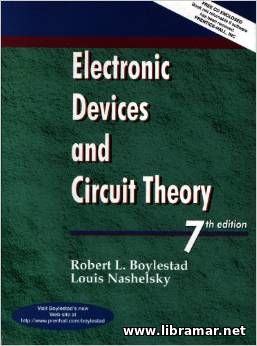 This publication is fully dedicated to the electronic devices and circuit theory; the intention of the author was to offer the students a thorough and comprehensive study of the subject topics. The material that has been provided in this publication will be of use for people willing to improve their technical knowledge and know hot to apply it to the day-to-day operations.
The authors of the book took a systems approach, covering the topics in a special fashion that allows to ensure students comprehend all fundamental aspects like transistors and diodes before they start with more advanced topics. The content of this textbook is mainly based on the semiconductor components. The authors of the book has explained to the readers what the diodes are and how they work, the reason of their function, their characteristics and many application circuits; the book is also intended to describe what the transistors are and shed some light on their most popular applications.
Moreover, the readers will know how to polarizate the transistors, and some other operations. They will get the necessary information on what the operational amplifiers, power amplifiers and oscillator circuits are. The book includes so many problems and illustrations for better understanding of the material...
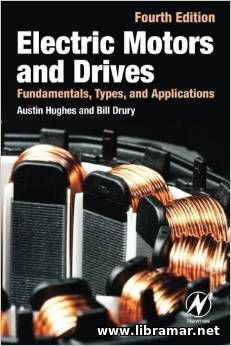 The publication is aimed at non-specialists using the electric motors/drives, and it was released to fill the gap that is there between the theory-based academic books and a bit more prosaic 'handbooks' providing useful detail but giving little to not opportunity for the real understanding and development of insight. It addresses nearly all modern types of motors/drives, including both conventional and brushless direct current induction motors plus servo drives.
The present third edition of the book includes numerous examples and diagrams; moreover, there are so many new topics covering the material that has not been included in the second release of the publication. The authors used a minimum of mathematics in order to make the book easy to use and make the material easy to understand to all groups of readers. The material and data provided in the book are up-to-date and will be useful to OEM designers, electricians, users of the electrical equipment, maintenance and repair personnel who are involved in making decisions.
Anyone who spends some time on this book will get a truly comprehensive understanding of the subject. We would say that it is an excellent technical book and maybe even one of the best books on electrical motors and drives available today. Though the material has been presented in a very understandable manner, the publication retains its technical soundness.
 This is the third edition of one of the most popular and useful publications related to the batteries. Considering the incredibly fast and steady growth of the manufacturing industry, it is understandable why the interest and demand for the safe and efficient batteries has grown, correspondingly.
The author of this reference book has made a successful attempt to collect the technical information available today on the different battery types in a single volume, which would be of great practical use for the people dealing with the batteries in the course of their day to day work.
After the introduction, some good and easy to understand guidelines have been provided on how to select the battery, followed with the section on the characteristics of the commonly used batteries, from lead acid, nickel and silver batteries to mercury, lithium, manganese, water-activated and so many others – literally all of them are covered.
Then, the readers will proceed to the general theoretical essentials and design of the batteries, together with evaluation of their performance. The next section of the volume is devoted to the applications of the different type of batteries. After that, you will receive good tips on the charging of the batteries, as well as the primary battery suppliers.
 The original intention of the author of this brilliant publication was to provide readers with the detailed descriptions of the various electrical equipment installed on board modern vessels, together with the explanation of their working principles. The volume will be a great tool for preparation to the exams and as such has gained so much of popularity among the students in different parts of the world.
This is the second edition of the book, featuring significantly reworked and updated content that would be appreciated by those willing to gain or improve technical knowledge in the field. There are several newly included chapters dealing with the shipboard shaft generators and also electric ship propulsion, reflecting the modern trends. The author has also included numerous informative data diagrams depicting the electrical distribution and control arrangements.
In addition to that, serious attention was paid to the safety when using the shipboard electrical equipment and systems. Every effort was made to avoid using too technical language; also, the supplementary materials, such as the diagrams, tables, and sketches, were made as simple as possible, in order to ensure easier understanding and reader-friendliness.
 At the first glance, the audience for this volume may look same as the audience for the broad-based textbooks on electrical engineering; however, it shall be noted that the content of the present publication differs in its structure, length and, what is most important, in its emphasis.
The traditional books mainly cover electrical circuits together with the electronics and then proceed to the electrical machinery, but the author of this volume believes that it would be much more important for the students of today to get information about the digital technology, even more important than the traditional electrical machinery.
The book is aimed at those students who require to get better understanding of the modern electronics as well as of the communication. The emphasis has been made by the author on the practical application and on the fundamental principles. There are three main parts in the book, and they are dealing with the electrical circuits, electronics, and communications.
Since electronics is commonly treated as the combination of R, L, C elements and active elements, the author made a decision to begin his work with a study of electrical circuits. In short, this is one of the best books on electronics and communications available on the market and it is highly recommended to the students and specialists.
 One of the best electrical engineering publications available today. The publication features impressive coverage of all important terminology as well as definitions and acronyms. This is the second edition of the dictionary and the author has made all necessary amendments to the original publication in order to make the dictionary better. His efforts have eventually resulted in a true bestseller reflecting all recent advances in electrical engineering and associated disciplines.
The lexicon of the dictionary includes more that thousand and half additional entries bringing a total number of entries to eleven thousands. The content of the dictionary has been developed n the basis of the invaluable contributions by the world leading experts. ore that a hundred of informative illustrations and data tables accompany the main content. The newly included areas cover the hybrid vehicles and mechatronics, data storage and embedded systems and sensors, process control and related instrumentation etc.
One of the reasons for the revision was to include many of the completely new terms of computer electronics, fuel cells and others. This fully up-to-date reference source embracing the whole electrical engineering and device electronics, digital systems and control/power systems will be equally interesting to the students and practitioners and is therefore recommended to all groups of users.
 Here is the second edition of one of the most useful publications for the electrical engineers engaged in the offshore industry. It has already proved to be an invaluable reference and training source for the engineers involved in the projects demanding in-depth knowledge and understanding of all equipment as well as the power installations and distribution systems.
The volume starts with the information on the different insulation types, temperatures and machine ratings, together with the associated measurements. This part is then followed by the generators and AVRs, transformers, electronic systems etc. the idea of the volume is to be highly practical and provide readers with the immediate benefits. Most of the electrical systems dealt with in the volume are 24V DC. The publication gives all necessary info on the batteries and chargers used for starting engines, and other equipment common on board offshore installations.
The book is full of the informative data tables and charts, so you may be sure that it will be equally interesting to the professionals and general readers. The operation and maintenance of the electrical systems and components has been explained together with the demonstration of the repairs and modification of the various instruments. Particular attention has been paid to compliance with the relevant regulations, rules and technical specification.
|