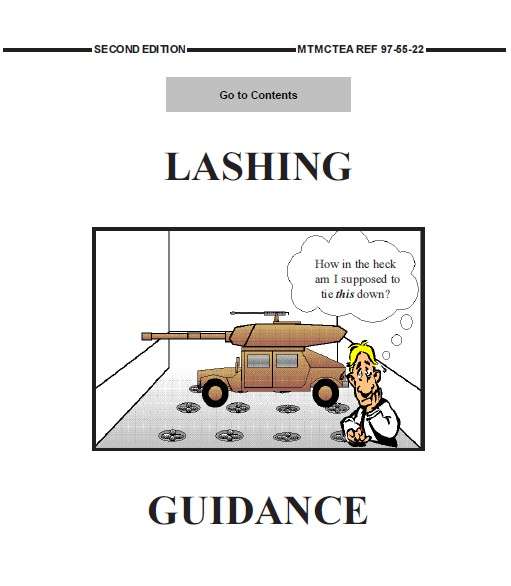
LASHING GUIDANCE
| Author(s) | John T. Atwood and others |
| Publisher | MTMCTEA |
| Date | 1996 |
| Pages | 96 |
| Format | |
| Size | 1 Mb |
| D O W N L O A D | |
The current National Military Strategy places significant demands on crisis response capabilities, making strategic lift more vital than ever. While airlift is crucial for personnel and priority cargo, sealift remains the primary method for transporting heavy military equipment.
Due to the volume and weight of this equipment, and the time required for sea transport, strategic sealift often represents the longest phase of deployment. This reference aims to reduce this deployment time by providing standardized marine terminal guidance for lifting and securing military equipment on strategic ships.
It offers proper lifting techniques and general procedures for securing cargo, drawing upon equipment characteristics, transportability manuals, and field experience. While this handbook doesn't cover every piece of Army equipment, it focuses on items commonly encountered in stevedore operations. Helicopters are addressed in a separate publication (MTMCTEA REF 95-55-21). The document highlights essential guidance through warnings, cautions, and notes.
The primary responsibility for marine lifting operations rests with military shippers until the equipment is onboard. At that point, the ship's officers assume control, dictating cargo securing procedures, which can vary based on the vessel, inspector, and anticipated voyage. This lack of standardization, as seen during Desert Shield/Storm, can lead to inconsistent and overly complex lashing procedures, wasting time, resources, and manpower.

The "Read Later" function allows you to add material to this block with just one click. Just click on the icon and read the articles that interest you at any convenient time.