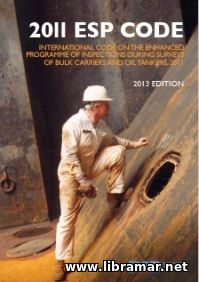
 The present 2011 ESP Code was originally adopted in 2011 by Res. A.1049(2). It was later made mandatory through the amendments to Reg. XI-1/2 of SOLAS convention. Subject regulation requires oil tankers and bulk carriers to be subject to the enhanced inspection programme as per 2011 ESP Code.
The main purpose of the CAS, standing for the Condition Assessment Scheme, coming under the Annex I to the MARPOL convention is to verify that the structural condition of single hull oil tankers is acceptable at delivery of the vessel and continues to be acceptable - this is verified through periodical surveys.
The content of this Code consists of two annexes. The first Annex A covers the single-skin and double skin bulk carriers, while the Annex B is dealing with the double-hull oil tankers and other oil tankers. The Code is closely aligned with the content of IACS UR Z10 addressing hull surveys to make sure that it is kept user friendly and simple.
The publication is definitely a must have on board any bulk carrier and oil tanker and will also be interesting for the people working in a maritime industry and willing to be knowledgeable about all requirements that may be applied to the subject vessels.
 The publication released by the Spanish Shipowners Association will provide required guidance to the PSC inspection in connection with the provisions of the BWM Convention. This is just a compact booklet but it still provides concentrated information about the most important aspects to consider. The opening page of the paper will explain to which of the vessels the Convention is not applicable - obviously, these are vessels without the ballast tanks or having those tanks sealed. The companies having such ships in their fleet shall provide the captains with the instructions so that they ensure that, when asked for the PSC inspection certificate, they will claim that their vessel is not designed to carry the ballast water and is therefore not bound; they shall also preset the stability booklet proving this statement. Then the content of the booklet covers the national cabotage and what shall be taken into consideration in cabotage trades, certification paperwork and additional documents, preparing to the PSC initial inspection etc. In addition, the booklet contains useful check list to e used for ensuring due compliance with D-1 standard and list of detainable deficiencies.
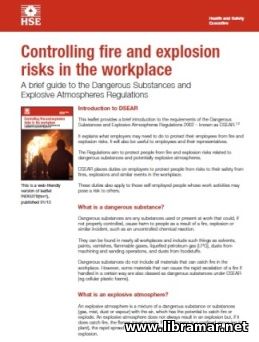 This is a compact yet quite comprehensive guidance booklet providing necessary information about the regulations governing the DSEAR, standing for the dangerous substances and explosive atmospheres. The document will give clear overview of the provisions of the DSEAR regulations and explain in detail what employers will have to do in order to protect their workers from the risks associated with fire and explosion.
It will be equally interesting to the employees themselves as well as to their representatives. The declared intent of the above mentioned Regulations is to protect human beings from the risks that are normally implied when dealing with the various potentially dangerous substances and explosive atmospheres. Subject products place additional duties on the employers who shall make every effort protecting their employees from the risks at the workplace.
In general, any substance that may potentially cause any harm to people when not properly controlled, shall be considered dangerous substances. Such substances could be found in most workplaces - for example flammable gases and chemicals, LPG and paints. solvents and varnishes - all these are dangerous substances...
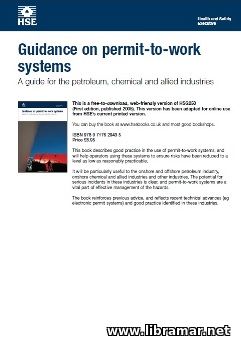 The present book was released to provide all people working in the chemical, petroleum and all relevant areas with the clear and easily understandable descriptions of the established good practices related to the use of the PTW, i.e. permit to work systems. The authors have also intended to assist the operators who are using such systems so that they can ensure that the associated risks have all been reduced to the acceptable and reasonable limits.
The publication is expected to be particularly appreciated by the workers of the petroleum industry, working on both onshore fields and offshore installations. We clearly understand and realize the potential for the serious and hazardous incidents in the petroleum and chemical industries, and that is why the implementation of the PTW system is considered an integral part of the safety development systems.
The booklet duly reflects all important technological advances in the field, such as the implementation of the EPS, standing for the electronic permit systems and others. The volume will provide interested readers with the information about the basics of PTW systems, responsibilities of all parties involved, associated training and competence of the personnel, risk assessment, planning of the working activities etc.
 Draught survey is a common method widely used for determining the weight of the bulk cargo transported by sea, and particularly coal cargo. The accuracy provided by these surveys vary. There may be some discrepancies between the loading and discharge results that lead to the commercial disputes between the parties involved including ship operators, sellers, buyers, marine surveyors etc., because the weight of the cargo is considered a basis for calculating the payment, port fees and freight.
Taking into account increasing value and volume of the coal trade, the shippers and receivers of the cargo are becoming seriously concerned about these discrepancies. That is why there was a need for the procedures and standards to be followed during the draught surveys.
The present Code contains the full set of recommendations to be used when conducting draught surveys and is expected to benefit absolutely all parties; it is also intended to provide valuable contribution to the implementation of the internationally recognized trade practices. It's main purpose is to make the above mentioned procedures uniform and give practical reference to the draught surveyors who may follow its provisions.
 The potable water including that delivered to the offshore installations shall always be "wholesome", i.e. fully compliant with the defined standards and national regulations. Subject standards are commonly developed in order to protect human health and the definition of term "wholesome" is intended to reflect the significance of the ensuring that the drinking water is of the quality acceptable to its consumers.
The provisions of the present document are aimed to apply mainly to the vessels that operate in the UK Continental Shelf; however it may also be applied to the vessels operating in other regions. The publication prepared by the specialists of the MSF, standing for the Marine Safety Forum, will give practical guidance relating to the delivery of the drinking water to the offshore facilities. Note that it is not intended to cover the maintenance of the hoses used offshore. The volume opens with the concise glossary of terminology followed by the background information.
A brief overview is provided of the supply chain of pot water to offshore facilities covering the potential areas of water contamination. Where such risk exists, control measures is necessary in order to minimize it. Two sections of the publication have been structured to reflect the steps required to be taken. These measures would normally include management and maintenance as well as the treatment and monitoring...
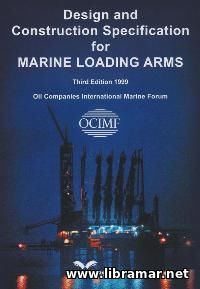 The present publication was prepared and officially published by the OCIMF organization. The loading arms are ordered to be used for specific practical applications that required thorough and very accurate specifications as well as considerable assessment by the engineers. That is the reason why they should not be treated only as pre-fabricated hardware.
The document will provide the shipping industry with the minimum basic requirements applicable to the marine loading arms together with the ancillary equipment commonly used for the loading and discharge of the vessels and barges at the marine terminals arranged in conventional manner. Opening with the information the standards and practices generally applied to the design and construction, the content of the volume proceeds to the design details and technical requirements and materials.
The chapter dealing with the design covers the general information and stress analysis. The other sections address the swivels, structural bearings, ERS, standing for the emergency release systems, quick connect and disconnect couplers, hydraulic power system and electrical components, controls and accessories, testing and control of quality, recommended documentation and other important matters.
 The document was published by the ITF, i.e. International Transport Workers' Federation to provide required guidance to the ILO MLC, 2006. The content of the publication starts with the list of abbreviations and terms. You will first read about when and why the MLC was adopted and who is covered under the provisions of this convention; moreover, this section also covers the basic and worker's rights together with the rights of the seafarers, structure of the convention and substantial equivalence.
The second section is devoted to the rights under the MLC and addresses the minimal requirements applicable to the seafarers working on board ships, conditions of employment, accommodation and recreational facilities as well as catering and food, health protection and medical care, social security and welfare, actually everything what is covered by the convention itself.
The next chapter is dealing with the compliance and enforcement including responsibilities of the Flag States, declaration of compliance, certification and their validity, maritime casualties, inspections conducted in ports and many other aspects. The last two sections of the document contain list of conventions that have been incorporated into the Maritime Labor Convention, and MLC index.
« 1 2 ... 8 9 10 11 12 ... 25 26 » |