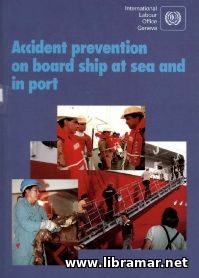
 The main goal of the present Code is to provide industry with the practical guidelines of health and safety in working on board ships with a view to ensuring that the responsibility is duly understood and that it remains the top priority for all persons concerned with the maritime transportation including owners, seafarers and governments, promoting collaboration between them, ad preventing the accidents and diseases plus any other effects.
The document provides required guidance in the implementation of ILO 134 and ILO 142 together with the other applicable recommendations and conventions. The volume is covering the health and safety of the seafarers working on the seagoing vessels. Note that some parts of the document will only apply to the ships navigating in inland waters or fishing vessels. Its provisions shall be treated as the minimum requirements to be taken into consideration for protection the safety and health of the seafarers.
The volume is dealing with the general responsibilities and duties of the parties involved, accident reporting, general health and safety considerations, permit to work systems, emergencies and associated equipment, transportation of the dangerous goods, safe access and movement, enclosed space entry, materials and tools, painting, welding and other hot works conducted on board, manual lifting, and many other aspects.
 The ILO adopted the MLC 2006 at a special Maritime Session which was held in Geneva. The basic goals of the subject convention were to ensure the protection of the seafarers rights worldwide. Another declared goal was to established a field for the UN Members and owners of the ships who are committed to providing proper working/living conditions on board.
Everyone shall have a clear understanding of the importance of decent food and nutrition to the people on board. Food is deservedly considered crucial to maintaining due health and morale of the crew members who will not be able to perform their day-to-day duties in the effective manner without safe and nutritious as well a appealing food.
The present document will provide relevant guidelines adopted by a tripartite agreement of the recognized experts from the governments, seafarer organizations, owners and their advisers plus the observers from various international and governmental organizations.
The publication of the guidelines was authorized by the Governing Body. The volume is designed to provide some practical help to those drafting national guidelines. The authors hope that this document will eventually make a valuable contribution to both health and morale of the workers.
 The volume belongs to the HSE Books series. The objective of the ACOP, standing for the Approved Code of Practice, and associated guidance is to provide readers with the practical recommendations and advice on what shall be done to reach compliance with the requirements of the DSEAR 2002, which is the Dangerous Substances & Explosive Atmospheres Regulations, requiring the complete elimination or significant reduction of fire and explosion risks from the substances taken in connection with the work activities.
This is a new edition of the ACOP and guidance with the streamlined and simplified text content. The material contained in the publication has been rearranged to help readers understand it easier. Note that the guidance are not mandatory and you are not formally obliged to follow them, unless specifically stated. However, following this guidance will normally let you get in compliance with relevant provisions of the law so it would be recommended to have a close look and duly familiarize yourself with the content.
Several appendices to the main section of the guidance cover other relevant legislation, fire resistance and fire reaction, transitional provisions relating to the workplace and work equipment. There is also a glossary explaining key terminology used in the document.
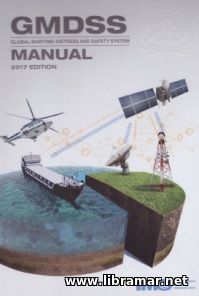 The latest release of the official GMDSS Manual. The present publication is published with the intention to provide, in a single and comprehensive volume, a thorough explanation of the principles upon which the GMDSS bases as well as to describe the radio-communication requirements together with the recommendations for implementation of the system, relevant operational performance standards supplemented by the technical specifications that shall be met by the GMDSS related equipment.
The document also covers the methods and procedures for the operation of the radio services forming the GMDSS. The Master Plan for the system has also been addressed. This edition of the Manual is fully updated. The content of the publication includes description of the technical concepts and history of development of the GMDSS, valuable excerpts taken from the relevant regulations of SOLAS convention, supporting regulatory documents such as circulars and resolutions related to the GMDSS.
In addition, there are ITU recommendations providing required technical details, the NAVTEX Manual, and many other information considered important and relevant enough for inclusion - in fact everything you need to be able to understand and use the GMDSS. The volume shall be used by the vessel personnel, shore supporting persons, regulatory bodies, administrations and all others engaged in ship communication in any way.
 The OSV Code providing all required guidance for the safe transportation of people and cargo by OSVs, standing for the offshore supply vessels. The official IMO release approved by the MSC and adopted by the Assembly. The content of the present regulatory document concerns with the safe practice in the operation/management of the offshore supply vessels when they are interfacing with the offshore platforms and other types of installations.
The volume will also provide valuable practical guidance on items commonly covered by SMS and required by the ISM Code. The book starts with General chapter providing the introduction to the information, definitions and relevant documentation, communication, and handling of cargo.
The next three chapters making the main body of the document, are covering port operations including cargo and communications related matters, sea transport and offshore operations including the associated mooring requirements, communication, transfer of the personnel, cargo handling and other important aspects to be considered. Three appendices give some supplementary information such as the types and examples of installations, interfacing activities and color code used for the bulk substance hoses...
 This is the 2012 edition of one of the most important IMO publications providing requirements to be considered during the application of the fire test procedures. The present Code was specifically developed with the ultimate goal to enhance its user friendliness and ensure uniform application of all requirements contained; another purpose was to generalize the experience which has been gained from application of Res. MSC.61(67).
The intention of the developers of the content of this regulatory document was to formulate all requirements applicable to the test procedures in a form close to the procedures commonly used in the industry. The material in the publication starts with the Res. MSC.307(88) covering the fire testing procedures and requirements to the testing labs and test reports, approval procedures and products allowed for installation with no testing and/or approval required, modern technology and equivalents etc.
It is followed by four annexes addressing all applicable requirements sin detail. The document applies to the products commonly required to be tested, evaluated and subsequently approved as per the FTP Code referenced in the SOLAS Convention...
 The dangerous goods transported on board seagoing ships shall necessarily be loaded in strict accordance with the established safety rules governing the segregation and stowage of the cargo per IMDG Code. This is quite easy to stipulate but usually very difficult to do. The specific information covering the relationship of different classes of hazardous goods in respect of the stowage/segregation of these goods is contained in hard-to-understand data tables of the Code.
The present Guide will provide all necessary assistance to the people engaged in stowage and segregation of the cargo on board ships and responsible for making the transportation safer. It shows the stowage with dangerous goods of the other classes and also provides information relating to the special segregation requirements applicable to the single substances of different classes, in fact all of them except for 1 and 7.
The document covers the rules for conventional cargo vessels, container carriers and Ro-Ro ships plus barges. All applicable IMO Security Provisions are incorporated. The arrangement of the material in this guide is similar to the arrangement in the Storck Guide for Stowage and Segregation to IMDG Code including Amendment 36-12.
 This guide book has been designed to provide a summary of both individual and general stowage/segregation requirements contained in the IMDG Code. It presents an extract of the subject Code containing all information commonly required by the people engaged in the stowage and segregation activities involving dangerous goods and/or hazardous materials intended to be carried on board sea going vessels.
To make using the document easier, its authors have printed the numbers of all relevant IMDG Code paragraphs. The document is intended for use by the workers of the packing stations and all other people involved including stevedores and cargo surveyors, terminal operators and ship planers, cargo officers etc. The content starts with the general introduction followed by the list of definitions and abbreviations used throughout the text of the guide, together with the units of measurement.
The next several chapters of the guide are devoted to the training and security provisions plus special procedures that would be normally applicable to particular materials, substances and articles. The dangerous goods carried packed in limited/excepted quantities have been addressed paying attention to their marking and all associated documentation, general stowage/segregation provisions, transportation of these cargoes on different types of ships including containerships, Ro-Ro and general cargo ships, and many other important issues.
« 1 2 ... 10 11 12 13 14 ... 25 26 » |