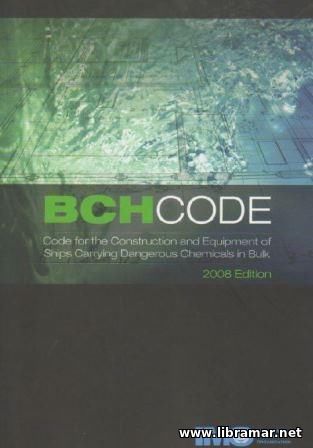
 The main objective of the BCH Code is to present the internationally recognized and applied standard related to the safe maritime transportation of the different noxious and dangerous goods in bulk, covering all tonnages through the development and implementation of the constructional features of the vessels. The main idea is to classify the tankers according to the degree of the hazard implied by the carriage of the particular substances, depending on its properties.
It should be noted that each of the substances transported by sea can have more than one hazard properties, for example, they can be toxic, flammable etc. Moreover, they can present hazard to the marine environment in case of their accidental release. During the entire process of developing the provisions of the subject Code it was taken into account that they should be based on the fundamental principles of the naval architecture and marine engineering.
In addition to that, the recent technological advances were also considered. Due to the rapidly developing field, the IMO reviews the Code on a regular basis to make sure that all of them have been duly considered. The document is mainly dealing with the design of the ship and the shipboard equipment and arrangements.
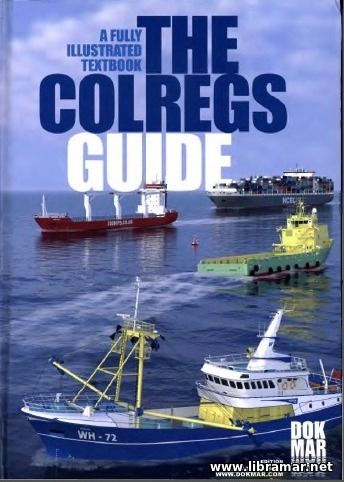 The fourth edition of the world popular guide to ColRegs by Klaas van Dokkum, author of the famous Encyclopedia. In fact, learning the ColRegs itself should not preset the students with any significant problems. After satisfactory passing of the exams and tests they have the feeling that the ColRegs and ship maneuvers for giving way are not that complicated and hold no secrets.
Studying some of the other aspects of the nautical science often requires much more effort than it is usually required for mastering the ColRegs. However, the busy channels will demand a completely different approach to the applying the Rules. In the present document each of the Rules has its own page, while on the next page the accompanying amplifications are provided. The rulebook is arranged in five major parts. The first part provides general information including application of the rules and responsibility of the parties, plus general definitions used throughout the document.
The part B contains the steering and sailing rules, while the third part addresses the lights and shapes. In turn, the last two parts are combined in one dealing with the sound signals and exemptions that the ship may be granted. Four annexes provide some supplementary information of positioning and technical details of navigation lights and shapes, additional signals to be used by fishing vessels, details of the sound appliances and distress signals.
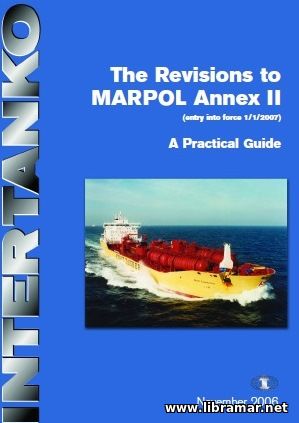 It is well known that the marine transportation of chemical substances is logistically and technically totally different from transportation of crude oil and oil products. Chemical carriers are much more advanced from technical point of view. Their cargo may be noxious and/or hazardous chemicals of very high value and transportation of such cargoes will require sophisticated handling in order to provide safety, health and loss prevention.
Since such vessels are very complex, they are more robust in comparison to regular bulk carriers. The huge number of cargo tanks, complex cargo operating systems and supply of deck services make it possible for chemical carriers to transport quite a wide range of various substances in accordance with the IMO IBC/BCH Code requirements. The chemical goods transported by sea require thorough and very careful consideration in the process of the planning and their loading on board.
Some of them can be sensitive to the temperature while others are presented in a form of the semi-gas; moreover, some of those cargoes can react with each other, and this all creates so many additional difficulties and risks associated with the marine transportation of such goods. That is why the main preliminary checks are to be made as necessary of the chemical vessel type, coating in the tanks, environmental controls such as inerting, cross-compatibility with any other carried cargo etc.
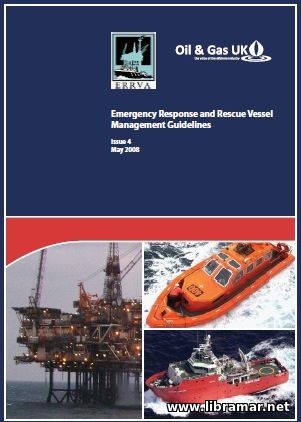 The present guidebook has been intended to provide the crew members and Masters of the EERVs, standing for the "emergency response and rescue vessels", as well as the OIMs, i.e. offshore installation managers and all other personnel involved in the offshore operations, with the general technical guidance regarding the proper conduct of those operations as part of the recovery arrangements.
This publication opens with the list of references and acronyms, explanation of terms and definitions that are used there throughout the document, general introductory information and guidance, followed by the information on routine operations - mobilization to location, operations on locations, verification and validation of recovery and rescue arrangements, procedures to follow when departing from location, emergency response and environmental emergencies, data cards, emergency response plans for offshore emergency and also escape or evacuation, typical installation checklist, example of the collision avoidance strategy, STS (ship-to-ship) transfer of crew by using rescue craft masters checklist, some established trial procedures for validation of the ERRV baseline performance, adverse weather standards, overside working and flying operations, baseline standards for recovery and rescue, place of safety and sample emergency scenario checklist, helicopter winching procedures, infringement of the safety zone forms, recovery and rescue support sharing methodology, and the use of non-certificated ERRV.
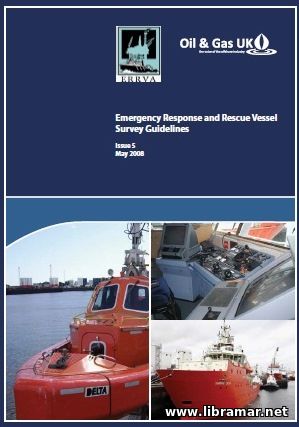 These valuable guidelines were prepared and officially released by the ERRVA together with the OGUK in order to provide the participants of the offshore industry with the necessary technical guidance to all operators and charterers of the ERRVs and marine surveyors to help them better assess the suitability of the vessels of the above mentioned type, servicing the offshore rigs, platforms and other installations and providing the required arrangements for the most effective response and recovery by offshore HSE legislation.
They were worked out following the extensive consultation with the MCA, HSE and a group of professionals and other interested parties. They describe what is commonly treated as a good offshore industry practice and recognized standards in order to enable the ship to carry out their fundamental functions of the offshore standby. It shall be noted that the provisions outlined in the present document are not considered mandatory, and the vessel operators are free to adopt different recognized standards in particular situations where following these recommendations will provide at least the equivalent or better safety level.
Among the topics covered in the document there are the certification process, stability, design and construction criteria, accommodation and various facilities for survived people, ERRV equipment, radio communications and others.
 This volume was prepared and officially released by IMCA in order to reflect the recognized international maritime industry standard addressing the training, competence as well as professional experience that is required to be possessed by all key personnel involved in DP, i.e. dynamic positioning, operations on the vessel equipped with the DPS.
The document has been designed for ships that are engaged in marine operations where the accidental loss of position might easily result in loss of human life, severe pollution to the marine environment, major structural damage to the vessel, and economic loss. The DP operators are requested to attend the formal training courses and also gain necessary practical experience; in addition to what is stated above, they should all meet the associated certification requirements. This publication is also providing some guidance relating to the structural familiarization procedure for the above mentioned personnel joining a vessel with DP system, or starting a new project.
Moreover, it also provides associated practices as well as principles for refresher training. In short, the book will give the useful guidance for assurance of the professional competence as well as assessment requirements in the maritime industry. Would suggest a copy of the booklet is kept on board of any DP vessel.
 The intention which has declared by the authors of the present technical document was to give the necessary professional guidance to all people directly involved in the ordering of the HMSF, standing for the high modulus synthetic fiber mooring lines, including the lines that are fabricated from Aramid, LCO and HMPE fibers. The aim is to ensure the due understanding of the particular mechanical properties of these mooring lines, encouraging the processes of adoption of improved technical specifications and quality assurance.
We would like to underline that the recognized international standards are there for the construction of the HMPE lines; however, the standards relating to Aramid and LCP fibers are limited. That is the main reason why the information contained in the present publication would definitely be of great practical use to people considering various ordering options.
The MHSF lines are considered as a good alternative to the traditional mooring lines that are usually made of the steel wires, due to their mechanical properties, particularly strength-to-weight, as well as the other advantages, for example the ease of handling. After several years of nearly incident-free use of the HMSF lines, the shipping industry has experiences a number of failures, particularly on large LNG carriers...
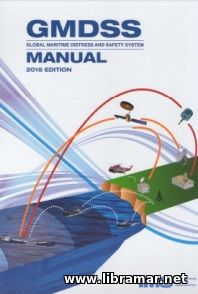 Please have a look in the publication offered here - the GMDSS Manual is intended to provide, in a single volume, a truly comprehensive explanation of all fundamental principles upon which the whole GMDSS system is based, together with the requirements that normally apply to the radio communications as well as relevant technical recommendations for the implementation and the standards for the operational performance of the associated equipment, it's required technical specifications, established procedures to follow etc.
The book features a remarkably detailed description of the concepts of GMDSS systems and their development, addressing also the system components, requirements for the carriage, supporting IMO resolutions plus other regulatory documentation; in addition to that, this document contains all relevant excerpts from SOLAS, ITU-R recommendations and relevant performance standards that have been developed by the IMO, NAVTEX and SafetyNET manuals, GMDSS Master Plan and wealth of other valuable information.
The publication has been released to be used by ship masters and personnel involved in radio communications, shore personnel, operators and trainers, marine authorities and regulators and in fact anyone interested. Note that this is the official 2015 edition of the Manual; please also note that the document shall not be treated as a substitution for the ITU Manual or any other mandatory publication...
« 1 2 ... 13 14 15 16 17 ... 25 26 » |