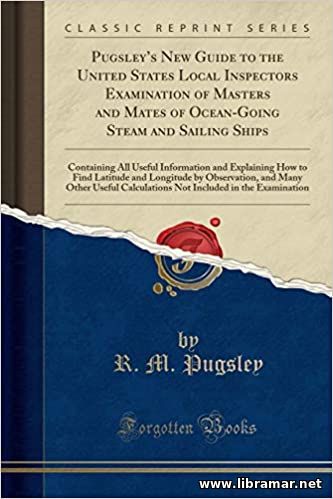
 This classic and historically valuable publication is not only the official and complete guidebook for the US Examination of Masters & Mates, a full treatise on marine navigation, law of storms and astronomy, but also a nice textbook to be used by the students and practicing marine navigators as a reference tool. The volume contains the complete list of questions that used to be given by the examiners, making it a good preparation book for the subject exams.
The publication covers the whole range of problems and every single requirement for those applying for the license on either steam or sail ships. Needless to say that even though the book is not in a wide use in the maritime shipping industry of today, it should still be interesting to the people fond of the ships of the past times.
Written by the recognized professional mariner with great seagoing experience, this publication will be useful for those willing to understand the concept of the ocean-going an sailing vessels, including explanations on the main navigation principles, associated calculations and so many other relevant areas that should be well known and understandable to anyone willing to work on board subject vessels.
 This guide book has been specifically prepared and released for the ship managers and masters plus senior ship officers working on the vessels registered in UK. The principal intention of the authors who have compiled the book was to provide above mentioned persons with the easy-to-use info connected with the existing UK Merchant Shipping regulations together with the all relevant administrative procedures.
These procedures and regulations might be significantly differing from ones the readers are familiar with and applicable to the ships flying other flags and the intention of this document is to guide the reader to compliance with the UK requirements. The current release of this guidebook was updated to be brought in line with the MLC coming into force. Twelve sections of the publication address the ship manning and applicable STCW requirements, hours of rest/work, crew lists, employment agreements, log books including GMDSS, health and safety matters, proper reporting of the accidents, requirements applied to the medical stores, surveys and audits, refugees, stowaways, alcohol, cadet training, CSR, i.e. continuous synopsis record, and a full list of UK publications that shall be possessed onboard. The annexes provide informative example of how exactly the RAF, i.e. risk assessment form, should be completed, and the MSF 4605...
 The fourth release of the FAQ to the ILO MLC, 2006 - worked out by the International Labor Office to serve as an integral part of the follow-up to the Action Plan. The MLC was officially adopted by the ninety-fourth session of the ILC in 2006, entered into force in 2013 and ratified by sixty-six countries having more than eighty percent of the world's GT of ships by 2015.
Please note that the answers that have been provided in the present publication shall not be cited as the legal opinions as the precise requirements of the MLC are there in the national laws/regulations. These answers are provided with the intention to give readers the required information in the form of concise and clear explanations that would refer to the MLC together with any other reference materials.
They shall not be considered legal advice. Literally every aspect is covered, including general in for about the MLC, questions about the people working on board the ships, questions related to the titles of the Convention, including minimum age, medical certification, training, qualification, recruitment, placement, conditions of employment, wages, hours of work/rest, leave, repatriation, manning levels, career development and so many other important issues.
 The official IMO release - International Grain Code. The provisions of the present Code are intended to replace the Chapter VI of SOLAS containing the regulations concerning the transportation of the grain in bulk form. The reason for such substitution was the growing need for implementation of the broader technical regulations to transportation of the goods posing the hazards to the vessels or their crews.
As a result, the decision was made by the IMO MSC to establish a new Code providing more general requirements and placing more detailed provisions on grain carriage. This volume consists of the IMO Res. MSC.23(59) followed by the Annex containing the Code itself and arranged in two parts addressing the specific requirements, general assumptions and calculation of the assumed heeling moments. The Appendix to the document contains the above mentioned Chapter VI of the SOLAS Convention which has been replaced by this Code.
Needless to say, one of the most important publication for the crew of any vessel involved in the sea transportation of the grain in bulk. The regulatory information provided in the volume will be very useful and shall be used as necessary also by the people conducting the inspections of such vessels, i.e. marine surveyors, port state authorities etc.
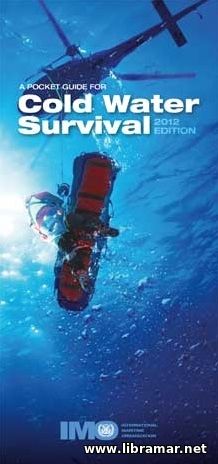 A very small but very important and useful publication officially released by IMO. In fact, it is primarily aimed at seafarers. The booklet provides the necessary information which will be very helpful to the crew members or any other humans if they fall into the cold water or face the necessity to enter cold water in case of emergency situation.
The book also gives some required guidance to help the fist-aid providers to treat the people who have just been rescued from cold water. The booklet is examining all hazards associated with the exposure of a human to the cold. Such exposure may easily endanger life. In addition, this volume gives some valuable advice basing on the very latest scientific and medical developments in the field of prevention or minimization of such dangers. Unfortunately, people still die at sea, and one of the reasons is a lack of this knowledge. Go through the information in this book and who knows, maybe the proper understanding of the content of the publication may someday save your (or someone else's) life.
The most important thing to understand and realize is that you shall not feel helpless to affect your survival when exposed to cold water condition. The book provides a good and detailed explanations of cold water hazards and effects they may have, and also lists the actions to take prior to abandoning the vessel, that may improve your chances to survive...
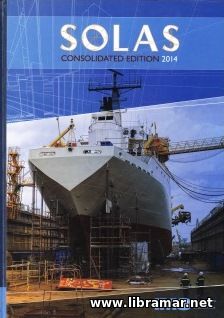 The very latest consolidated edition of the most important IMO Convention. The main purpose of the Convention is, traditionally, to provide the maritime industry with a broad range of measures that have been specifically designed with the intention to improve the safety of human life at sea. Note that the SOLAS Convention is also the oldest one, with its initial released officially adopted more than a century ago, namely in 1914, following the famous tragedy - the sinking of the Titanic resulting in the loss of more than 1500 human lives.
Since that time, the Convention has been re-issued four times in order to be in line with the technological developments happening in the shipping industry. The present volume contains the consolidated text of the Convention and it was prepared to provide readers with an easy and user-friendly reference to all requirements of this Convention that become applicable since July 2014. All amendments to the requirements that are in effect from July 2014 have also been covered in this volume.
Again, there are twelve main chapters in the publication providing the general technical provisions, addressing the structure of the ship, it's subdivision and stability issues, machinery and shipboard electrical installations, fire protection, prevention and firefighting systems, equipment and arrangements, LSA, radio and navigation equipment, transportation of various types of cargoes including dangerous cargo, nuclear ships, safety management, certificates issues to the ships fully complying with the applicable requirements of the Convention, relevant documentation, list of the IMO resolutions and a wealth of other valuable regulatory information.
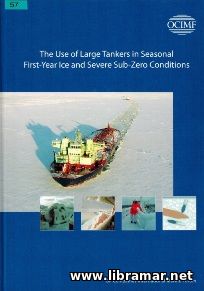 The main purpose of the present volume is to provide necessary guidance to the vetting/chartering groups and improve safety of tanker operations in geographical regions normally affected by such thing as the seasonal first-year ice - subject regions would include Barents, White and Baltic Seas, Sakhalin Island, Eastern Canada and Cook Inlet.
This guidebook should be primarily applied to the tankers with low or no ice class and having deadweight of fifty thousand tones or more. Note that the content of this document does not cover specialized or established ice trades utilizing high tonnage.
The charterers are recommended to limit the use of vessels with low or no ice class at all in the above stated areas as well as not to us the non-winterized vessels during sub-zero conditions defines as forecasted DMT, i.e. daily mean temperature of below fifteen degrees Celsius.
The opening section of the guide provides the information about risk assessment and vetting, professional commentary on the notations, engine power and winterization of vessels, navigation of large tankers in iced conditions, response to the oil spills and proficiency of the crew members of such ships. Some additional information is contained in the appendices, for example useful references.
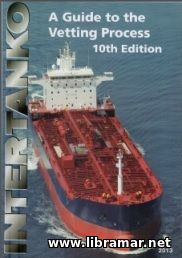 And here is the tenth official release of the popular and recognized guide to the vetting process that has already proven to be highly effective and really invaluable tool providing both crew members and the supporting staff working ashore, together with the oil majors and ship charterers with a better and more clear understanding of this process necessary to ensure that the vetting goes in a smooth and effective manner.
The Secretariat of the Intertanko organization receives numerous requests for the updated information on the requirements that would apply to the vessel inspection and vetting for oil/chemical companies, underwriters, insurers and other involved parties - serving as a good supplement to the info that pertains to the various PSC requirements.
The present volume was compiled with the contribution and help of the vetting departments of several oil companies, PSC inspectors and other representatives of the authorities, marine surveyors, who provided valuable information satisfying all concerns. The present volume is highly recommended by the Intertanko organization to put a copy of the present volume onboard each ship plus in every office ashore in order to assist the crews of the oil tankers plus the personnel who are working in the shore offices for due preparation for the vetting inspections...
« 1 2 ... 14 15 16 17 18 ... 25 26 » |