 You are highly encouraged to have a look at this sixth edition of one of the most popular dictionaries of ship terminology available today. Note that the content of the previous release has been supplemented with more than three hundred new terms, provided with the traditionally good explanations.
This new edition features impressive coverage of the major bulk cargoes and the way they are normally shipped and handled onboard modern vessels. In addition, the equipment that is involved, is also addressed in detail. Moreover, the container shipping has also been dealt with.
The author of the volume made a truly great effort in trying to clearly identify and define all standard documents, including those newly introduced and revised ones, such as the bills of lading, and added numerous new clauses tat are nowadays included in the subject documents. In general, the material of the previous edition was thoroughly reworked and updated, making the dictionary a must-have book for all people in the industry.
 This is the second part of the excellent course of maritime English taught at the Greek Merchant Marine Academy. The coverage of the course is absolutely impressive and includes virtually all areas situations to be encountered by the future mariners. The material of this part of the course is arranged in fifteen are invited to discuss the case of grounding of the Astral vessel, share the associated information and analyze it.
In the second unit, the importance of the English as a common communication tool is explained, together with the cultural norms and possible differences, miscommunications etc. The third unit is dealing with the ship operations, particularly anchoring, preparation for departure and arrival, and pilotage, while the fourth unit addresses the safety aspects including the provisions of the ISM Code, risk assessment, maintenance, bridge checklists etc.
The rest of the volume covers such the important aspects as the safety of navigation, maritime security, chartering, insurance, navigation aids and associated systems, emergency response, watches, carriage of the dangerous goods on board, interactions with the Port State Control inspectors and so many others. Note that the first part of the course is also available and you are encouraged to use both as a set.
 Here is the opening part of the popular course of Maritime English presented by the Greek Merchant Marine Academy. The coverage of the course includes the items of the professional interest for the deck crew, engine crew, and bridge crew. It starts with the IMO SMCP, standing for the Standard Marine Communication Phrases, and continues with the general information important to the seafarers, including the cadet application form and job profiles, job duties and ranks of the officers and ratings etc.
Then the trainees are invited to proceed to the ship familiarization, including the identification of the various ship parts, associated terminology, merchant ships and their types, etc. This one is followed by the unit on the shipboard safety equipment and the relevant regulatory framework, such as the SOLAS convention. The next unit is entirely devoted to the onboard working activities, while the following one addresses the emergency on board ships, including the rescue procedures.
The remaining units of the course cover the cargo handling activities, ship particulars, accidents, incidents, medical care and other topics considered sufficiently important to be included in the main part of the course. Note that the second part is available here.
 Here is one more useful training set for those studying English and willing to improve their skills in terms of using and properly applying the phrasal verbs. It goes without saying that knowing these verbs and also how and when to use them properly, will make your speaking and writing language much better and richer. That is why all students of English are encouraged to go through these books.
Note that there are two volumes included in the set – one for the students and intermediate level, and another one for the advanced learners. Traditionally for the books of “In Use” series, they can be used for self-studying as well as in the classroom or remote training. The arrangement of the material is somewhat similar. The students will get to know about phrasal verbs in general, as well as understand some interesting aspects of their application.
The areas of life covered in the volume include work, study, finance, personal life, the world around us, and others. There is a mini dictionary supplementing the main body of the book. In short, get both of these books and start immediately from the intermediate level one and then progress to the advanced level volume to get the maximum benefit from your studying.
 The present set of training materials consists of two volumes belonging to the world popular series, presented at our website and including such famous titles as “English Grammar in Use”, “English Vocabulary in Use”, and so many others. The books are intended to be used by the trainees at Intermediate and Advances levels, and they are both great when used in the classroom as well as for the self-study.
The idioms included by the authors cover the vast majority of the situations one expects in his or her life. Knowing them all is actually too difficult but you may wish to have both volumes readily available for reference. There are about sixty training units in each of the volumes so it will take considerable amount of time to go through carefully, but we promise that no one will ever get disappointed with the new knowledge obtained.
You will get to know how the idioms shall be used; understand specific types of the idioms, as well as the ways they are commonly used in our day-to-day life and activities. We would recommend going through both of the books attentively to make sure that you have covered every single aspect, and your spoken and written language has significantly improved as a result.
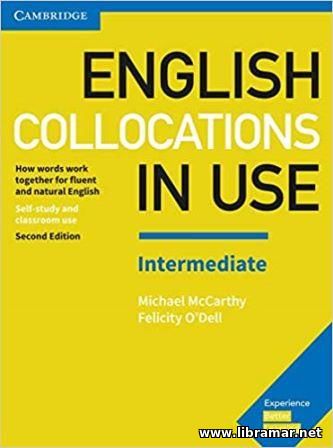 Here is the second release of the excellent training set for those studying English. It consists of two volumes, namely the self-study and classroom guides for the students of intermediate and advanced levels. You will have to check yourself and understand which one will suit your training needs and capabilities better.
The students of English will be enabled to improve their fluency and, upon completing of all chapters of these books, they will sound much more natural when speaking. The collocations are two or more words that often go together. That is why it makes sense to spend some time studying them, as this knowledge will bring you the capability of richer speaking. The authors of these volumes included the most commonly used and spread combinations for the subject levels.
The books will be equally great when used in the classroom environment and for self-studying. The collocations shall be studied in context, and the trainees shall get confident about what they are studying. Here, the important role is played by the approach used by the releasers of the books, who made a perfect research to understand the real speaking and written English. Needless to say that the set is a great training resource for preparing for the IELTS and/or Cambridge examinations.
 IMU-CET - English
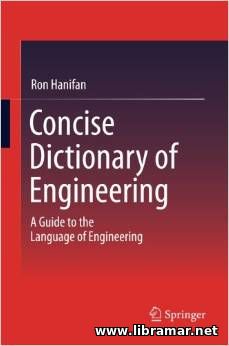 Here is the essential reference book defining the most commonly used terminology and principles usually found in various engineering papers and drawings from various fields. All of them have been explained in this publication in a very plain and unambiguous English.
The purpose of the book was also to distinguish how some engineering terms take on different meanings in different contexts, and this is of course critically important when people start working on collaborative projects with many colleagues and diverse elements. The book provides general technical definitions of various engineering-specific terms.
It clarifies all most popular technical terminology usually misused/intermixed and may serve as a very handy reference for all engineers; in addition, this publication provides a reference materials collected from the recognized and authoritative sources, including various standards and commercial specs.
Ron Hanifan, who is the author of this book, did his best to span a range of engineering disciplines covered by this publication so that it could include electrical and mechanical engineering as well as materials. It will be ideal for engineers, students and any other people who require due understanding of the engineering language.
|