 This book is mainly concerned with the regime and current practice of the granting of refuge in a port or any other safe haven, i.e.,a "place of refuge", to a vessel needing immediate assistance. A ship may actually require assistance in various situations, and sometimes that assistance may be provided to the vessel while it is at sea, such as when a seriously ill or injured seafarer on-board needs to be airlifted to receive urgent medical treatment in a hospital.
Occasionally, there are situations where the ship's safety is at stake as a result of stress of weather, so-called force majeure or an urgent necessity. Perhaps the ship has received salvage assistance, and the salvor is instructed and obligated to take the stricken ship to a safe place. In such situations it is considered absolutely imperative for the ship to seek and enter the closest safe haven available.
When a ship seeks refuge, in all cases it will be for exceptional reasons and in exceptional situations. The place of refuge is not normally the intended destination of the vessel. The content of this publication will be of practical interest for the persons dealing with subject issues, planning the shipping activities including the possible situations where the vessel may have to seek for a refuge port.
 Nowadays, the naval engineering is considered the area of professional study and expertise concerning the important aspects of design of the naval vessels, their construction as well as operation and routine maintenance. The ONR, the abbreviation standing for the Office of Naval Research provides all necessary assistance to the specialists engaged in the technical and scientific researches supporting the naval engineering.
The main content of the present study is made on the basis of the information obtained from the meetings at the Marine Board of the TRB, i.e. Transportation Research Board. Subject discussions have highlighted the significant role played by the ONR in education and research activities in the field of naval engineering and have also identified the demand for the assessment of the effectiveness of the Office in fulfilling this important role...
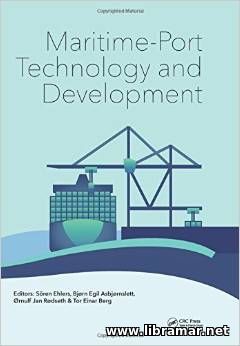 The present publication provides readers with the results obtained in the course of the very latest researches as well as the technological innovations that all were presented during the Conference held in Trondheim, Norway in 2014.
The content of the document is arranged in several chapters, presenting the articles covering such areas as the optimization of the port-ship interface, maritime transportation activities and related operations in the Arctic region, effective infrastructure of the sea ports, various novel fuels including LNG, their use and distribution, use of the environmentally-friendly and efficient sources of energy in ports and on board ships, remotely controlled and remotely monitored shipping traffic control and surveillance, logistics optimization, safe maritime operations and many other important topics.
The volume is expected to significantly contribute to the reliability and efficiency of the maritime transport and operations; it will be useful to the practicing engineers and scientists working in the field of marine technology researches.
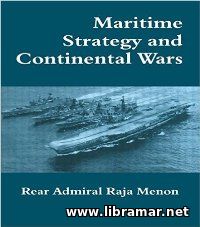 Here is a research work performed by the Rear Admiral Raja Menon trying to provide the explanation of how the maritime strategy relates to the warfare, paying particular attention to the mid-size and small powers who may possibly have little to no understanding on the value of a Navy. Following are the main topics addressed in this book - War and strategy; Current literature and case histories on the maritime strategy in the continental wars.
The remaining chapters of the volume are covering such important aspects of the maritime strategy as the wars on the economies and the Navies, the newly introduced option of the amphibious warfare, the United States maritime strategy, useable maritime strategy and battlespace dominance together with the speed of battle. A good volume for the persons with the interest in these aspects of the maritime strategy and naval issues.
 This book is mainly dealing with the modern ship technology matters confronted by the management of the shipping companies during the recent decades. Some of the specific technologies have been described together with their regulatory, economic and even political aspects.
The content is arranged in fifteen chapters. While the first chapter is introductory, providing readers with some general overview of the shipping industry of today, chapters 2 to 6 are devoted to the liner shipping - that main emphasis has been set by the author to the real life examples taken from the experience of the shipping companies operating in America, such as the American Mail Line, American President Lines and others.
The chapters 7 to 13 are dealing with the fleet investment analysis, again based on the business experience of such companies as Ogden Marine, Legrand Shipping Co., Laval Maritime and other. Finally, the last chapter of this book addresses the ship-port interface using the Seadock and Loop and Venture Oil as the examples.
 This volume is one of those forming the famous Marine Navigation an Safety of Sea Transportation, note that all other books of the series are also available at our site. This one was compiled to provide readers with a good and thorough overview of the transport and shipping matters and is mainly aimed at the maritime industry professionals and scientists directly engaged in the research activities and development of the navigation safety and transportation of cargoes by sea.
It contains the materials presented in the course of the TransNav symposium of maritime shipping industry professionals which took place in Poland in 2013 bringing together a widest range of the participants from all parts of the world and offering a remarkable variety of the topics to discuss, including safety at sea, training of the navigators, maneuverability of the ships, sea traffic engineering issues, maritime simulators and their use for educating future navigators, integrated systems, ECDIS, anti-collision systems, radio-navigation equipment and other important items. have a look i this book and to all others making this series.
 Another publication of the Marine Navigation and Safety of Sea Transportation series. You must have already noticed that all of the books making this set of volumes are prepared on the basis of the materials presented during the TransNav symposiums. continuing this tradition, the present volume was made using the articles and documents of the symposium held in 2011.
Though the list of topics covered in the course of the meeting was more or less standard for these symposiums, the materials of the presenters were considered very relevant and interesting enough to form another compilation. The authors/editors of the volume, Tomasz Neumann and Adam Weintrit have collected and edited the most interesting and valuable ones.
This publication is expected to be of great practical use to all professionals of the international maritime shipping industry, in the first turn - especially to those willing to be always duly updated with the latest happenings in the industry.
 Today, marine cargo management is playing critically important role in transportation of the various goods between selling and buying parties. It shall be noted, however, that even though more than ninety percent of the whole international trade is conducted by sea, people commonly have quite little knowledge about the cargo management.
This unique publication is intended to provide absolute clear and very comprehensive intro to the major elements that are involved in the marine cargo management and transportation of cargoes by sea. It analyzes the key theories and is expected to be equally instructive on both logistics and practice. In addition, the volume will provide a thorough guidance to the roles of all parties of the industry together with the responsibilities assigned to those parties.
This edition incorporates all recent changes in the procedures and legislation, including Incoterms 2010, dry/liquids cargo management, salvage and cabotage, risk management, tramp shipping matters, offshore supply management, the IMDG Code and many other important issues that were considered necessary to include in this second release of the publication to make it even more useful to the readers.
« 1 2 ... 12 13 14 15 16 » |