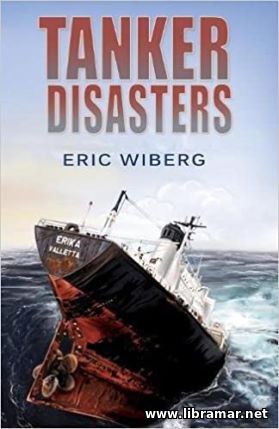
 Despite all the numerous efforts made by the maritime authorities as well as the coastal officials, the ships engaged in the transportation off the oil cargo still need so much of assistance when it comes to working in the proximity of the environmentally sensitive areas. The three recent casualties involving tankers showed that the due attention should be paid to the subject in order to avoid the reoccurrence.
The present publication was prepared to provide all interested readers with the valuable information in this respect. According to the reader reviews, the author of the book has presented the contents in a remarkably attractive was making reading it very intriguing. The author made a brilliant historical combination of the events that took place in the recent years but in fact are not depicted in detailed in most of the publications – this is the gap which the author wanted to fill.
The efforts taken by the author have eventually resulted in the impressive title that immediately gained popularity in the industry. We definitely recommend this book, and not only to the people working on tankers or engaged in tanker shipping but to all those caring about the safety of the shipping an protection of the marine environment. я
 Today, there are so many title available covering the shipping industry as a whole and port activities in particular, and containing tons of useful information and data on the important aspects of these industries. Taking into account that these two actually complement each other, the author decided to prepare a compact volume that would provide a valuable insight in each of them and provide readers with the essential understanding of how they contribute into the national economy.
However, the number of books devoted to the port industry is considerably less that those covering the shipping. That is why the author concentrated on the port activities in order to cover fill in the gap. The main objective of the present publication is therefore to give newcomers some general knowledge to these industries, providing him with the necessary background which will serve as a foundation to build the further studying.
The material is arranged in two big sections covering the port operations, including the types of ports and techniques involved, pilotage and cargo handling, port management structure, charging etc. and maritime transport, where such information as ship types, certification, terminology, economics and other critical aspects are covered.
 Nowadays, the oil is considered to be the most important energy source in the world. The shipbuilding facilities all around the planet are providing the owners of the ships and oil companies with the tanker ships and this flow has been quite steady during the past century. However, it shall be understood that the increasing amount of fuel leads to the increased risk of environment pollution.
We are all well aware of the numerous incidents that resulted in catastrophic marine pollution by oil and oil products, such as the Torrey Canyon, Exxon Valdez, Prestige and, unfortunately, so many others. The modern crude oil tankers feature a capability of carrying nearly half-million tons of oil and just imagine the damage to the environment that the incident on such ship will result. The present publication prepared by the recognized industry expert was released with the main objective to get people duly familiarized with the dangers associated with the transportation of oil and oil products by sea, looking from the pollution prevention point of view.
Regretfully, the fact that the crude oil is actually a “natural” product being the integral part of the environment is of no comfort to the living organisms impacted by the oil spills from the vessels and gives little to no relief when the beaches get smeared by the oil.
 This publication is intended to be concerned with the most significant matters relating to the tanker markets. The author has selected the several issues of the tanker marker and shipping cost structure with the objective to bring some clarification ion some of the most complicated issues. According to the author, the history keeps repeating itself when we are talking about the behavior of the people operating in the tanker markets of today.
If you have a close look into the contemporary tanker shipping market, you will be able to observe the very same incidence that used to take place in the past, throughout the whole history of shipping industry. Unfortunately, as the problems continue to repeat, this shows that the people literally refuse to learn… The publication is quite compact and in fact it is a working paper.
However, the author addresses some matters that will definitely be of practical interest to the people directly involved in the contemporary maritime shipping industry, and particularly cost management when applied to the tanker market. Taking into account the huge experience possessed by the author, it would make sense to familiarize yourself with the volume and find something practically interesting.
 This is the presentation prepared by Dr. Angela Carpenter in the European Centre of Excellence. The document was prepared to address the importance of the marine ports and transport to the economy of the European Union including the geographical scope. The author has also covered the known threats to maritime security, supplementing the text with several examples.
In addition to that, particular attention has been paid to the practical measures and cooperative activities within the European Union. We know that almost ninety percent of the whole foreign state of the European Union is seaborne; there are millions of tons transported by sea. More than four hundred million passengers travel through the European sea ports every year.
This compact yet quite informative and useful publication will assist not only mariners but in fact any people interested in the contemporary maritime shipping industry – they will find some good information with the focus made on the security which is obviously a matter of utmost importance. Such aspects of the maritime security as terrorism, drug trafficking and illegal immigration, narco-terrorism and other critical topics have been addressed.
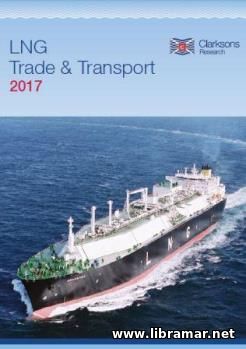 The content of the present publication released by the Clarkson Research, the world recognized and very authoritative providers of intelligence to the international maritime shipping industry, was intended to provide readers with the comprehensive and professional overview of the Liquid natural Gas industry as well as the LNG trade and transportation of the LNG. There are eleven sections in the present report.
The first section gives a general overview of the LNG sector. It is followed by the section containing useful and informative data tables. Two following sections will give the information about the exporters and importers of the LNG, respectively, all sorted in alphabetical order. The trading routes for the LNG are addressed separately including thirty bilateral routes.
The remaining sections of the document are dealing with the LNG carrier fleet with the listings, order book for the LNG carriers sorted by ship size, builder and owner, technical manager and containment system. You will also find useful information about the top builders of the LNG ships, repair facilities and even LNG atlas. In short, this is an absolutely recommended book for anyone with the interest in the modern LNG industry.
 We recommend you to have a look into this rare and very interesting book about the history of Dutch fleet. The publication opens with some background on the glorious history followed with the information about today's dredging fleet. Then the main portion of the volume comes, dealing with the merchant fleet and ship construction including stamina and special ship types, as well as the maritime equipment.
One separate section of the publication has been devoted to the rapidly developing offshore industry. Long story short, the book will be of practical use to the people with the interest in the past and present of the maritime shipping and offshore industry in the region. The author of the book aimed to explain to the readers the unique features offered by the Netherlands in the maritime sector of the industry.
This is quite an easy reading though the research conducted by the author was very deep and extensive. This is not a book for professionals and scientists but rather for the general readers willing to know more about the Netherlands and the fleet serving there. Taking this into account, the volume can be recommended to everyone and even to the people outside maritime and offshore industry.
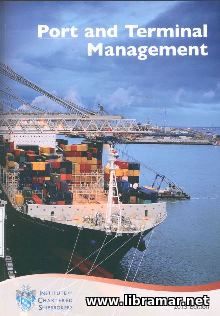 Nowadays, sea together with the seaborne trade and associated communications play increasingly important role in the global culture of international commerce and connection. Looking at this system, in its very center we will see that the sea ports of the world are deservedly considered the most critical links in the whole chain. We know that the international maritime shipping represents more than ninety percent of the global trade.
To any seafarer, the safest place for the vessel loading and discharging cargo and passengers, are the sea ports. Here we are talking about the safety of the vessel from weather, damages and of course this is the most secure place. The fundamental requirement to the port location is definitely the existing commercial demand for the transportation of people and cargoes. The sea ports are normally developed in areas where the natural safety is provided; however the safe harbors can be arranged if necessary.
The ports present the interface linking water and land means of transportation. Obviously, a good port would possess well-arranged land transportation links and facilities required to store and handle the goods... The present publication is aimed at the people involved in design and management of the sea ports and terminals.
« 1 2 ... 4 5 6 7 8 ... 15 16 » |