 And here is one more interesting publication on the naval history. Though the title of this book mentions Jutland, in fact this volume is much more ambitious. Andrew Gordon, the author of the present great work, has used that famous naval battle as the top exhibit to demonstrate the evolution of the British Navy. He also provides an excellent professional explanation of the Admiral Tryon's navy campaign.
At the very first glance, this publication is a sort of examination of the several specific tactical decisions made in the course of the Battle of Jutland explaining the major differences between the so-called "command climate" the battle fleets under Beatty and under Jellicoe. The description of the actions provided by the author, together with the timeline breakdown, together with the discussion and conclusions relating to the different conflicting timelines and narrative texts put forth have all made this publication to be found very popular among all naval history enthusiasts as well as in the community of professional naval historians.
The readers should also note a remarkably thoughtful and careful examination performed by the author of the manner the organizational culture and also the leadership norms in the British Royal Navy shifted at the times of the unchallenged supremacy...
 This book written by Arthur Sellwood tells us about one of the most famous naval vessels of the past - MHS Li Wo. Subect ship had been constructed in 1935 with the original intention to be running the passenger transportations on the Yangtze river. Some years after that, in the year 1940, the vessel was requisitioned and subsequently commissioned as HMS Li Wo into the Royal Navy.
Quite shortly before the Singapore's surrender which followed in 1942, the vessel got an order to be heading for Batavia (now Jakarta) in Indonesia. The vessel had come under the massive air attach and had to confront the convoy of the Japanese Navy forces that was heading for the Sumatra Island being escorted by a whole squadron of warships.
Though HMS Li Wo was armed only with the one four-inch gun and two Lewis guns, they made a decision to attack. After that war, Commander of the vessel was deservedly awarded a posthumous Victoria Cross for the bravery he did demonstrate. In his brilliant work, the author has made a good attempt to piece together nearly unbelievable story of the most decorated small vessel in the Royal Navy fleet, and this is a story which might otherwise got lost in the archives of the Admiralty...
 This is a truly beautiful title containing masterful information content accompanied with perfect illustrations. In this comprehensive volume, the author has set out not only political and social, but also the technological backgrounds in which the galley and galleon did arise and drive their evolution; he has also managed to perform a thorough examination of the naval gun technology considered a primary driving force in the above stated progressions.
The readers will definitely appreciate the format where the topical chapters are alternating with the technical descriptions of the naval battles. In this work, he has included all peripherical information possessed, for example relating to the naval warfare before gunpowder, world trade of those times and emerging maritime powers, revolution of the gunpowder, confrontations between France and England, in addition to many other important aspects giving people a complete and clear picture of the subject.
John Guilmartin has provided readers with an excellent professional review of the changeover that occurred in naval power. All of the info that have been presented in this book has been perfectly arranged in a remarkably readable style making it very understandable even for the newcomers. Definitely recommended to all people willing to improve their knowledge of the naval history.
 We have shared a happy collaboration in this book. Our friendship even survived the translation of the texts for Appendices One to Five, where we were concerned to achieve a delicate balance between producing a readable English translation for Byzantinists and the general public and preserving the literal meaning of technical language as closely as possible for maritime and military historians.
John Pryor has been responsible for the historical research and for the writing of the text. Elizabeth Jeffreys has been responsible for the editing of the texts in Appendices One to Five, for the translation of Greek texts, for matters philological, and for the interpretation of the milieux of the Byzantine sources. We are indebted to Ahmad Shboul for his collaboration in Appendix Eight... The authors of the volume have conducted a very thorough examination if both development and further evolution of the Dromon war galley together with the Chelandion, its relative, from their original appearance until supersession by Galea.
Among the salient technical features of these vessels were the spurs at the bows lateen sails, special two-banked system of the oarage, and the "Greek Fire" - their primary weapon. The volume is contextualizing the technical characteristics of those vessels within the history of Byzantine fleets, covering the associated logistical problems and strategic objectives.
 The modern image of the sailing-era frigate is of a 44-gun frigate with a main battery of 24-pound guns. In nautical fiction authors love pitting the hero against a 44-gun French or American frigate. Fiction is only part of the reason. The last surviving American frigate of that era, USS Constitution, belongs lo this class. The most famous Royal Navy frigate of the Napoleonic Era, HMS Indefatigable, was one of Britain's rare 24-pound frigates.
Yet 200 years ago the 44-gun frigate was a freak. The world's navies built only a handful of these monsters. By 1802 the 24-pound frigate was considered a failed experiment. The Royal Navy decided that the smaller 38-gun frigate was a handier choice. The American Navy built 13 frigates between 1794 and 1801. but only three 24-pound frigates. No others were built or planned. Ten years later these three American 44s redefined the frigate. Their victories led to a new generation of large frigates.
Navies now built and maintained frigates of a size formerly associated with ships-of-the-lint, and large frigates dominated the last three decades of the era of the sailing warship. A very interesting publication with the content that will definitely be greatly appreciated with all people having the interest in the warships of the past.
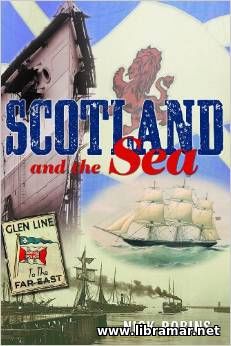 The British Merchant Navy was supreme from the close of the Napoleonic Wars until the era of cheaper operating costs that emerged under selected foreign flags some 150 years later. Scottish engineering, ship-owning and operating ships, as well as enterpreneurial and business, all played a big part in the brilliant success of the Merchant Navy. Scottish emigrants took skills with them to the ends of Empire that promoted trade and wealth creation both at home and overseas.
In terms of engineering, 'Clyde-built', was the one time 'Kitemark' for the shipbuilding industry the world over. The shipowners of Scotland included household names such as Allan, Henderson and Donaldson, while Scotsmen were also instrumental in founding, and for much of the time managing, Cunard, Orient, British India, Glen and many other well known "English" companies.
The story is traced from a variety of angles, even from the role of people such as David Livingstone in developing trade. The school of the 'Honest Scot' working in the City of London includes the iconic tale of the takeover 'merger' of P&O by British India. This book aims to stir the memory and rekindle interest in this fascinating part of the history of the British Merchant Navy during the preparation of the book.
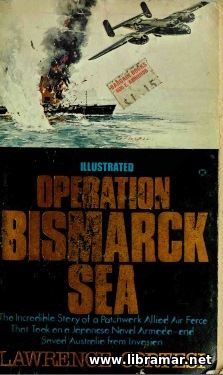 This book by Lawrence Cortesi has been already top rated by the readers and found to be very interesting and entertaining reading - this is a sort of novel about one of the most important naval battles in the South Pacific. The sea operation to which the present publication has been dedicated to, proved to be there among the critically important achievements reached by the American forces.
In fact, it was the very first time when the aircrafts operating from the bases on land and having no naval support attacked, have attacked and have managed to destroy a complete naval armada at sea. This is one of the best titles by Cortesi who is the author of dozens of interesting volumes. The book tells us a very interesting story, The author writes in quite fluid style pulling the readers quickly through the narrative text.
In fact, the whole content of the volume does not take you too long to read through, and the author has effectively fashioned all historical facts into a very final story. The author has provided a truly impressive list of the sources he used when preparing the book. Once again, the publication is very enjoyable and informative and that is the main reason why it gained so much of popularity among the readers. You can hardly find any other title that would contain so much of relevant information on the subject addressed in this book.
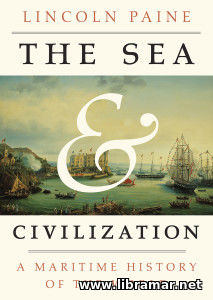 Here is a very monumental retelling of the world history through the sea lens that was prepared and released to reveal in remarkable depth how humans first contacted with one another by water, i.e. by rivers and oceans, streams and lakes, and how various religions and cultures, languages and goods did spread along and across the waterways, connecting civilizations and defining what makes us human.
The publication is a rhapsodic narrative text covering the experience of the maritime enterprise. The author takes readers on a fascinating intellectual adventure making clear how the rises and falls of the human civilizations can be linked to the seas. The author has presented the maritime history of the world spanning from the ships recorded in the very primitive pictographs to the vessels of today, addressing every single regional arena of maritime activity and elevating the awareness of rivers and seas as important conduits between people and states throughout the whole history of the mankind.
The book contains a very good and informative discussion of the posture of the ancient human civilizations toward the sea and features the coverage if waning and waxing of the great empires as it could be evidenced in the exchange of various goods and vessels that were dealing with their transportation.
|