 A truly excellent reference book that should definitely be considered a must-have publication in any engineer's home library. Michael Volk, who is the author of the volume, has managed to create a well-thought work which is very easy to read and containing the materials very easy to understand even for non-professionals in the field. The amount of the material included in the publication is really tremendous.
We would for sure say that the book could easily serve as a textbook on pumps and their technical characteristics allowing all people to get to the good level of knowledge of pumps in quite organized manner. The author presents clear and understandable descriptions of creating system curves and also of evaluating the pump curves. The book will therefore be helpful in describing the various associated electrical components and also in providing required guidance on how to reduce the pump usage costs. Note that this is one of the most popular and, as per the reviews submitted by the readers, maybe the best volume for all mechanical engineers.
This is the second edition of the book which has been significantly expanded in comparison to the first release; it now includes some completely new chapters added to cover the newly introduced technologies.
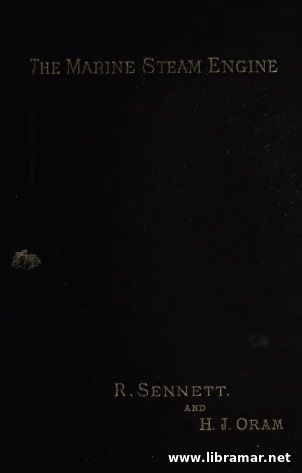 Another classic publication, this one was first released nearly a century ago, in 1923. The book represents an excellent reproduction of a very important historical work, while the team of authors who were preparing the present release did their best trying to maintain the same format of presenting the information as the one used in the original publication.
Note that the publishers of this volume have not applied the OCR when preparing the soft copy of the book; instead, they have declared that the application of such technique would lead to sub-optimal results, e.g. confusing formatting, many typo errors etc. The author strongly hopes that the present work will be more culturally important in the original form. As it can be easily seen from the title, the book is fully dedicated to the marine steam engines.
The book opens with the introduction giving some historical overview and describing the progress in the field of marine engineering. Then, the main body of the book comes, divided into three major parts, named "The Boiler", "The Steam", and "The Mechanism". This set of sections is followed by the section providing general information on the pumping arrangements, auxiliary shipboard machinery, construction materials, fire arrangements, indicator diagrams and others.
 The title of this publication is quite self-explanatory. The book is mainly focusing on the matter of thermal design and some important performance aspects of the fire-tube and water-tube waste heat boilers, steam generators and other relevant equipment including economizers and air heaters.
The author of the book has worked out more than a hundred of real-life practical issues presenting them in a way that would be helpful for the boiler plant engineer to evaluate the newly installed boiler plants or make modification to the existing boiler arrangements without having to approach the boiler manufacturers or suppliers for assistance. All key technological trends and developments relating to the design and construction of the boilers have been covered in this volume in order to prevent the new ideas for the improvement of the efficiency of the boilers and also with the intention to lower the drop in gas pressure.
The book will also help practicing boiler plant engineers to better understand and correctly evaluate the performance of the steam generator/waste heat boilers they maintain. Numerous very informative calculation procedures have also been included in this book; in addition, the appendices to the main body of the book contain the simplified procedures of estimation of the heat transfer coefficients.
 The last Coen & Hamworthy Combustion Handbook was written by Arthur H. Light in 1920.' In the late 1980s, Coen authorized the publication of a new combustion handbook at the request of its customers, but day-to-day work never allowed time for the book.
The origins of this book started during a business trip. In early 2000, one of the editors (Steve) was on a trip to visit a major Coen customer with a young Coen application engineer. During dinner, the engineer told Steve a story of a number of engineers debating the units of molecular weight for hours. It was at this moment that Steve decided a unique kind of book was needed that did not exist for combustion engineers. The book needed to be all inclusive and cover the very basics in building block form up to more complex combustion topics for everyone involved in combustion systems to use.
This book is designed for all engineers and professionals involved in the field of industrial and utility combustion systems. It is roughly divided into two parts, consisting of a total of 17 chapters, sequentially covering relevant and important combustion engineering basics and then specific computations and applications. Each chapter is roughly organized from simple to more complex, thus allowing the reader to absorb as much as they may need before moving on to the next chapter. Practical examples are also included.
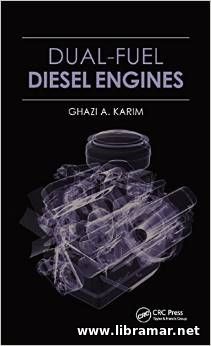 This work by Ghazi Karim, the recognized industry expert and university professor with more than forty years of the experience, offers readers a very detailed technical discussion of various types of dual-fuel engines, the types of gaseous fuels they work on, and the associated operational and maintenance practices.
The author has reflected all latest cutting-edge technological advancements in the subject fuels that is so rapidly expanding today. The book is quite timely and explains the main benefits as well as the challenges that are associated with internal combustion engines, gas-fueled engines, compression ignition engines, and, as it is stated in the title, dual-gas engines. The author has also made an attempt to explore both natural gas and ethane as engine fuels, also paying some attention to the LPG, hydrogen and some other fuels that can be used as the alternative.
The most important safety considerations have also been addressed in the publication, together with the relevant aspects of the fuel gas combustion and conversion of the conventional engines to the operation on the dual-fuel. In short, the book is covering a wide range of the engines with the main emphasis made on the engines used in the transportation sector.
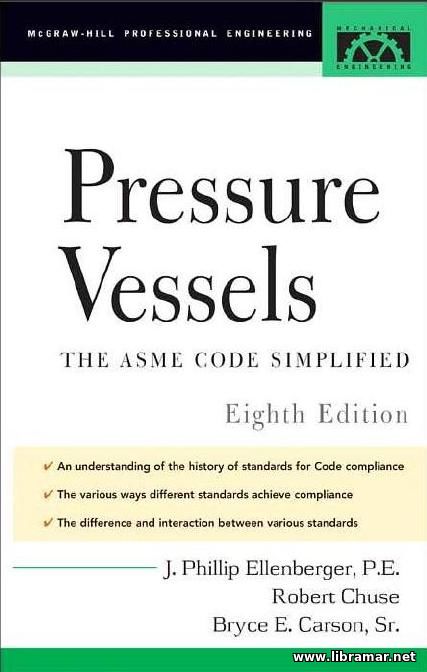 This is a nice book, very nicely organized and full of great technical information. It will help readers simplify the things that they need in the ASME Code. The publication is breaking down the section of the ASME Code into the easily understandable abstracts concentrating on the most relevant matters and leaving out all non-essential stuff. We would recommend this book to be used as a very good reference source to those people needing to get information without having a code breaker.
A very useful addition to any ASME Code shop doing all what is stated in the title. The book is eminently readable and so well written. This eight edition has been significantly revised and updated to serve as an excellent engineering tool simplifying the understanding and applying the content of the ASME Code for fabrication, purchase, testing and periodic inspection of the pressure vessels. It has been filled with technical solutions that will help to solve the most typical problems and this has resulted in a very handy tool providing the expertise required by everyone in order to deal with all latest changes in the requirements applicable to the pressure vessels.
The readers will know how to comply with the ASME standards for the pressure vessel inspection and quality control, welding matters, and, of course, safety procedures to be followed during the design and further maintenance of the pressure vessels.
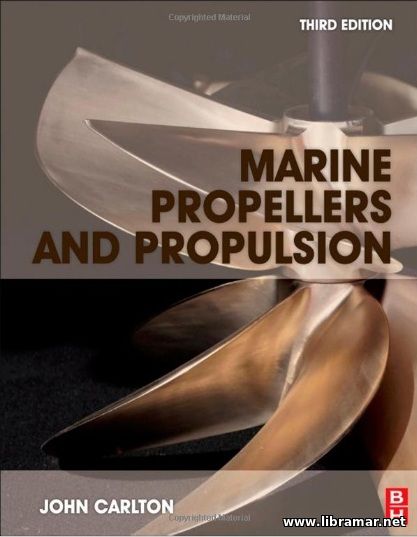 The ship propulsion technology is a really multi-disciplinary and very complex technical. This publication by John Carlton, who is the a recognized expert in the field, was specifically prepared and published with the ultimate intention of the writer to bring together the whole wealth of technical information collected from the industry and to provide readers with the very comprehensive and max full coverage to assist the naval architects plus marine engineers though will be equally useful to any person with the interest in ship propulsion and associated hydrodynamics-related issues with all required knowledge that would require to perform their duties well.
It goes without saying that this is maybe the most complete publication available on marine propellers today. Moreover, note that it has been seriously revised and significantly updated by the author; he has also added several completely new chapters addressing the ship propulsion in ice conditions and also high-speed ones.
It is the essential reading and a good reference tool for students of marine engineering and professional naval architects/marine engineers, because it is definitely a truly invaluable source of information providing all required data and detailed specifications. All these factors have made the book very popular within the industry.
 The present publication is exploring a complete new and economically viable approach to the design of the pressure vessels, included in the EN 13445, i.e. harmonized standard applicable to the unfired pressure vessels and basing on both non-linear and linear FEM, standing for the finite element analysis.
The author has intended to prepare a book that could serve as a useful supporting reference tool of the route of the above mentioned standard and providing the students and professionals of the industry with all required technical background information related to the fundamental principles and basic ideas, as well as pre-suppositions and some new notions.
The theory has been supplemented with the numerous practical examples that have been included by the author with the purpose to get the readers familiarized with subject approach and also to highlight the critical problems and proposed solutions, covering all possible advantages/disadvantages of the proposed approach.
It introduces some new definitions, terms and ideas, used in a general context. There are also some chapters dedicated to the design check and including introductory sections together with the description of the background...
« 1 2 ... 8 9 10 11 12 ... 19 20 » |