 The present volume contains the proceedings of the joint meeting of the geological groups, first group dealing with the marine studies and the second one engaged in petroleum geochemistry. The materials included in the publication have all been arranged in three major parts.
The first two parts of the publication are mainly addressing the environment of the rocks containing oil with the main emphasis being made on the technical concepts and established methods of working with the organic sediments that are normally generated in the course of the so-called anoxic events.
Here you will find the information about the role that the source rocks play in the exploration of petroleum, pyrite formations, characteristics of the rocks, distribution of the source rocks, formation of the deposits, organic sedimentation etc.
The third part of the book provides statistical and graphical data in connection with this and is also dealing with the organic geochemistry and geography, covering different geographical regions and all aspects considered important enough to be included in the volume by the author who compiled the book. The publication will present practical interest and use to the people involved in the offshore exploration of the hydrocarbons.
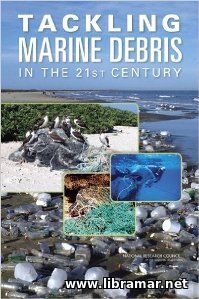 Nowadays, marine debris that are discharges from the vessels and other source, including the trash as well as the lost fishing gear, is seriously contributing to the ongoing spoiling of the beaches and fouling of the seafloor and surface waters; in addition to that, it causes significant harm to the marine mammals and other negative effects.
Regretfully, the existing domestic laws and international conventions that are intended to provide the due control of the discharge of marine debris, have not been too successful, and one of the reasons for that was that the laws provided little incentive to the changes in the behavior.
The authors of the present publication have made an attempt to properly identify the established ways of reduction of the wastes, decrease in the disposal of waste at marine ports, and also to strengthen the whole regulatory framework towards a zero-discharge in the environment of the sea. The progress in this field will mainly depend on a commitment to the sustained funding and also on the appropriate support.
The relevant authorities should target research in order to get to the sound understanding of the sources, associated fates and potential impacts of marine debris by means of the planning and prioritization of the related activities, and also provide the required support to the establishment of the rigorous protocols allowing to monitor at a broad variety of scales.
 This is the very latest third edition of the "Methods...". The initial edition of the title was released about thirty-five years ago and was revised in between in order to take account of the latest interest and scientific approaches. As a result, this edition of the publication is absolutely up-to-date; the authors are making his best to to provide readers with the information on such topics relating to the studies of marine benthos as the analysis and design methods used in benthic surveys, diving systems, macro- and meiofauna techniques, sediment analysis, characterization of the seabed, sampling of the deep-sea benthos, and measurements of the energy and flow matter etc.
The book has the aims mostly similar to the ones that have been declared in the previous editions of the publication, and even retains more or less arrangement including topics covered. However, it should be noted that there are some serious changes to the content of the book - for example, the authors dropped the chapter dedicated to the vessel position fixing, and they also appropriately redistributed in several chapters the considerations of phytobethos that used to be contained in one chapter. There are some other changes made to this publication by the author
 In their publication, the authors intended to review the latest developments in the field of hydrology through the experiences of the team of engineers and scientists; it addresses the study of extreme fluid flows, water resources, data handling, basin studies and instrumentation, terrestrial hydrological processes and modelling, water quality, eco-hydrology and climate change, hydrological data acquisition and exploitation, future prospects etc.
There are some images provided at the last part of the publication to supplement the text. The hydrology itself is considered truly vital to the whole civilization and to the natural ecological system; however, it became a separate science during last fifty years or so.
The publication is mainly intended to provide interested readers, both the specialists and enthusiasts, with the comprehensive technical review of the recent developments of the contemporary hydrology via the experience gained by the multi-disciplinary team of recognized professionals, including the engineers and scientists, who have actually been there at the very forefront of many of advances. We think it is needless to underline the value of the information collected and presented by the authors of this volume.
 The present interesting title has been specifically compiled and published to present readers a good technical overview of the most important established methods, products plus various applications of marine biotechnology. The publication starts with the discussion of the chemical properties of the various marine polymers together with their types.
Then, the author of the volume addressed the utilization of these materials in detail, paying some attention also to the methods of both analytical and characterization testing. The volume is also emphasizing the polymer materials considered maximum friendly to surrounding environment, along with their applications within the industries as well as the origin. The above mentioned polymers are broadly used in the industries, including various marine purposes, well applications and others. This book is arranged in four big part.
While the first part is giving the general information on the marine polymers, the second part addresses all possible applications in the marine industry, including coatings, foams, anti-fouling, ropes, anti-corrosion materials, engine lubricants and others. The third part covers the waterborne polymers with the main accent made on the synthesis methods, waterborne coatings and also special applications. Finally, the closing part of the book has been dedicated to the water-resistant polymer materials.
 Conducting the measurements of the sea level changes is deservedly considered to be among the most pressing goals of today's marine science, and it requires application of the sophisticated scientific techniques and approaches. The initial aim of the authors of the present handbook was to provide the interested readers with the useful and practical guidelines assisting them in this challenge, starting from the stage of the initial design of various research approached, through to the practical matters of collection and further interpretation of the relevant technical data obtained from a broadest range of the coastal environments.
The content of this volume is built on more than thirty years of researches, and the body of the work has been divided into thirty-eight chapters authored by the world leading experts. The publication is expected to serve as a very important and practically useful resource to be used by the scientists willing to get a proper understanding of the changes in the sea levels across a very wide range of relevant technical disciplines, plus policy-makers who are wishing to appreciate the actual situation with the knowledge of these changes, as well as university teachers and research students, who want to know more about this problem.
 This interesting title prepared by John Woods in collaboration with Nadia Pinardi provides the conceptual basis and major applications of the ocean forecasting. The publication was specifically released to provide readers with a consistent and exceptionally comprehensive overview on various methods and popular applications of the ocean forecasting worldwide.
Subject sector of marine technology and science is development very fast owing to the constantly increasing demand for the reliable and multi-disciplinary info related to the marine systems that would allow the sustainable utilization of the coastal resources as well as mitigation of potential global change effects. Some of the chapters of this book have been dedicated solely to the theoretical and conceptual basis of the ocean forecasting, that range from the design of the observational and modeling systems, established techniques of data assimilation, and modeling of numerical ecosystem.
The volume is also covering numerous live examples of the forecasting and modeling systems that are either in use or being established. The publication is expected to be practical and also useful for both students and scientists in all relevant disciplines, since it will enable all of them to gain proper understanding of the current level of technical knowledge/performance of the forecasting systems existing today.
 The ocean waves generated by the wind are considered one of the most prominent features of the ocean surface. We know that the ocean covers a huge part of our planet, and the ocean waves cover all oceans. In fact, the wind-generated ocean surface wind is maybe the only object in the science of oceanography which does not require any general introduction.
The present publication prepared by Alexander Babanin, is outlining the current situation in the research related to the wave breaking and is also presenting the most important outstanding problems of today. The influence of the effects of non-breaking dissipation on the atmospheric boundary level have also been covered in the book, together with the extreme weather conditions and upper-ocean mixing.
As a result, we can consider this book to be a very valuable source of information aimed at any person with the interest in the topic, including engineers and forecasters, modelers and researchers, scientists and students in the fields of ocean engineering, oceanography and meteorology. Among the topics covered within this book there are detection of wave breaking and its measurements, probability and severity of the wave-breaking, energy dissipation, analytical theories, and so many other important topics.
« 1 2 ... 4 5 6 7 8 ... 15 16 » |