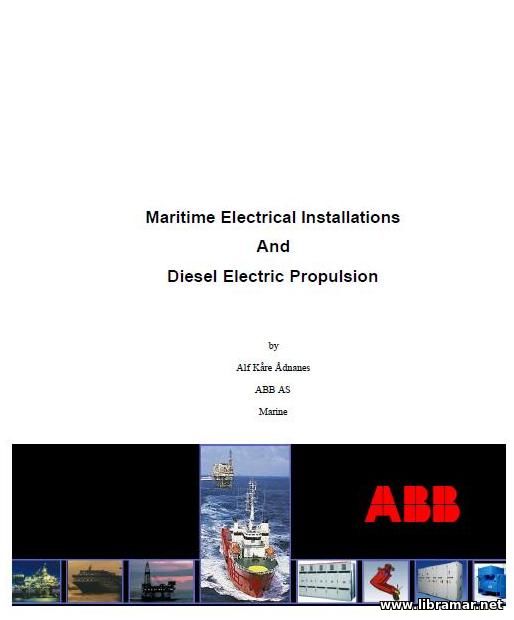
 The present tutorial report has been prepared with the intention to provide a good overview of the application, solutions and the required introduction to the main components of the electrical installations of marine vessels. It will be useful when treated as a reference source for people needed the updates on the recent solutions in this fast developing field.
Every marine ship has some electrical installations used, for example, for powering of the various systems like communication, alarm, monitoring and others, for running of shipboard motors, fans and pumps, and up to the high-power electrical installations used for actual propulsion. The opening part of the publication explains scopes and objectives of this report and provides some introduction. Then the second part describes the various applications and it is followed by the part in which the overview of various electric power systems is provided.
There are two parts on the propulsion/power control and electric propulsion drives. The rest of the chapters address system design, harmonic distortion, and example configurations for different types of vessels, including support ships, tankers, LNG carriers, offshore floating installations etc.
 The present booklet is aimed to provide an explanatory guidance for checking electrical systems on board marine vessels. Of course, the first step to do will be to clarify any possible confusing points with some professional electrician prior to the commencement of working on any of the electrical systems.
The checklist covers nearly all items - electrical connections, batteries and their chargers, common ground point, alternators, starters, stray current, fuses, switches/breakers, charging diodes, diagrams and equipment labeling, cables/wires, bilge pumping system, corrosion protection, 120 Volt alternate current system, various electrical meters, anchor winch. In addition, pre-cruise mini check list is provided.
This short and compact yet very useful and practical publication will provide all necessary technical guidance to the people dealing with the operation and periodical maintenance of the shipboard electrical equipment/systems as it will help them ensure that all related equipment, installations and systems are duly maintained and continues to be good working order. It will also be useful to the people conducting various inspections and surveys of the subject equipment to check if same is compliant with the requirements of the regulations and good marine practice.
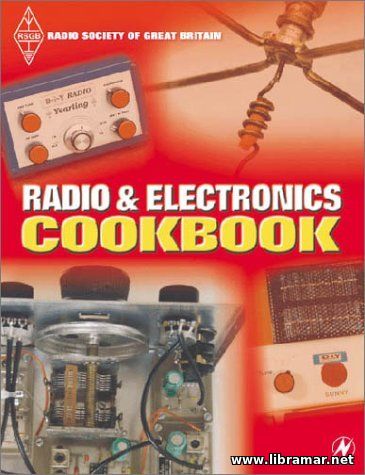 Today, we are all surrounded with the very sophisticated computerized gadgets; however, we still consider it some sort of fascination to put together a few electrical resistors, odd transistor and capacitors in order to build a very simple electronic circuit. Well, it is very surprising how a handful of simple components can function together, and building a circuit yourself brings a true satisfaction which is incalculable.
This publication has initially been intended to provide its readers with numerous electronic and radio projects - some of those projects would take just few minutes but others may take much longer to construct. The author describes some popular and effective construction techniques, again from the simplest to quite complex projects.
The projects presented in this book have originally been published by the Radio Society of Great Britain, and were proven to be quite useful and straightforward, with the emphasis of the authors being made on the practicality. Most of the projects have been backed with mini-tutorials of the components they consist of, and concepts that have been employed in their design and construction. Any reader of this book will enjoy the hours spent reading it and will increase the knowledge of how and why the circuits work...
 The ultimate purpose of this Handbook was to provide people with a good reference book that would summarize the core engineering knowledge serving as the basis of electronics and radio. The author made the particular emphasis on thoroughness.
More than 2000 of technical articles have been reviewed in the course of the preparation, and the publication in its final form presents in a perfectly organized way the more important contributions that have been made to the art by this vast body of tech literature. In the selection of material an attempt has been made to avoid the common failing of most handbooks, which instead of summarizing all of the important facts about a topic, and bringing together formulas and procedures useful in actual design, too often devote most of the available space to introductory material, such as found in good textbooks, and to descriptions of particular equipments.
The text is well documented, there being about fifteen hundred footnote references to published articles. Practically all the pertinent engineering literature in English that bears on any particular subject is referred, to in connection with the text on that subject. The reader who wishes to make an intensive study of a particular topic is thus in most cases spared the necessity of engaging in a time-consuming search through many indexes to find out what has been published.
At the same time, the essential information, formulas, etc., are insofar as possible included in this book. The reader, therefore, does not need to have an entire library within arm's reach in order to obtain the answer to most problems, and yet knows just where to go for further information.
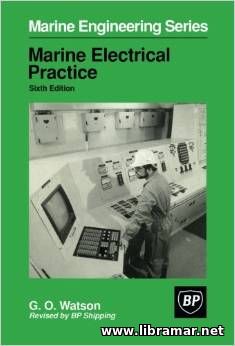 The sixth edition of the Marine Electrical Practice book belonging to the famous and popular Marine Engineering series. Nowadays, marine engineering includes offshore engineering in addition to the traditional sea-going vessels. The industry professionals usually accept that the electrical apparatus that are manufactured to be used on shore are usually not suitable for use offshore due to the climatic condition, continuous motion and vibration, temperature and other very important factors that might affect the safe and effective operation of the equipment.
In most of the cases the electrical apparatus at shore are not operated day-and-night or even for too long periods and at constantly high loads. With regard to the marine and/or offshore use of the equipment, there are two considerations in its selection and subsequent installation on board the vessel or offshore unit - the reliability of the equipment and freedom of such equipment from the fire risks.
These conditions would require a perfect installation with best available materials as well as the outstanding workmanship, operation and maintenance after installation. The chapters of this book are dealing with the factors that usually contribute to the requirements stated above and shall be considered by the marine engineers and electrical officers...
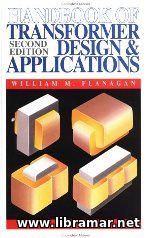 This handbook was initially aimed to address such the important topics related to the design and various possible applications of the electrical power transformers as the electric/magnetic fundamentals, analysis of the electric circuits, their power performance of power, wide-band, audio and pulse transformers, application of the ferromagnetic materials in the inductors and transformers, thermal and mechanical and thermal considerations, core design procedures, insulation arrangements, inverter and rectifier, multiple-phase transformers, quality assurance, use of computers etc.
The present second release of the handbook updates the readers with what is now considered a standard reference relating to the transformer application and design, and it also features a wide selection of modern computer solutions to the numerous transformer circuit problems. Every chapter of the handbook is reflecting the very latest technological advances.
Try this handbook and you will definitely get much closer to the correct understanding of the design of power transformers. The material has been presented in a very understandable way without having to go too deep into the maths and theory so that everyone could find the book useful for training, including self-study.
 The volume offers all readers a good technical treatment of the all possible issues related to the design and fabrication of small motors. In general, the concepts described in this book would normally be applicable to larger machines. The layout of the publication is very goof and reader-friendly, it means that the information is places exactly where it would be needed.
The theory of the electric motors is explained in a very understandable and readable manner making this book a complete reference source for the design and manufacturing of the small electric motors, i.e. ones of less than 10 hp power, and their applications. It provides readers with the remarkably comprehensive intro on the basics of such motors and gives a detailed coverage of almost twenty types of electric motors and drives. The authors of the book have also included several step-by-step methods of calculations related to the design and application of the motors, supplemented with the informative practical examples.
The required reference data on construction materials and fabrication methods is also there. Definitely recommended reading for people directly involved in the design, operation and technical maintenance of the subject motors and trying to find the best cost-effective solutions.
 An excellent manual prepared by the professionals team of the Stanford Power Generation company. The publication contains the useful technical information concerning the recommended instruments for electrical metering and testing, provides readers with explanation of the commonly used electrical terminology and popular abbreviations; of course, as it is implied by the title of the manual, the main focus in it has been made by the authors on the generator fault finding methods - note that for the purpose of this publication, subject methods have been divided into two main groups - the group A includes the methods applicable to all generators while the group B is described in two separate chapters.
The first one is dedicated to the self-excited generators only - in this case the AVR, i.e. automatic voltage regulator, is being powered from the generator output; the second one addresses the separately excited generators, and in this case the AVR powers from the permanent magnet generator. Finally, the closing chapter of the book provides instructions on parallel operation and fault finding that are applicable to all generators. The manual will be useful for ship mechanics and electricians dealing with the maintenance of the generators.
« 1 2 ... 11 12 13 14 15 16 » |